Keep on moving
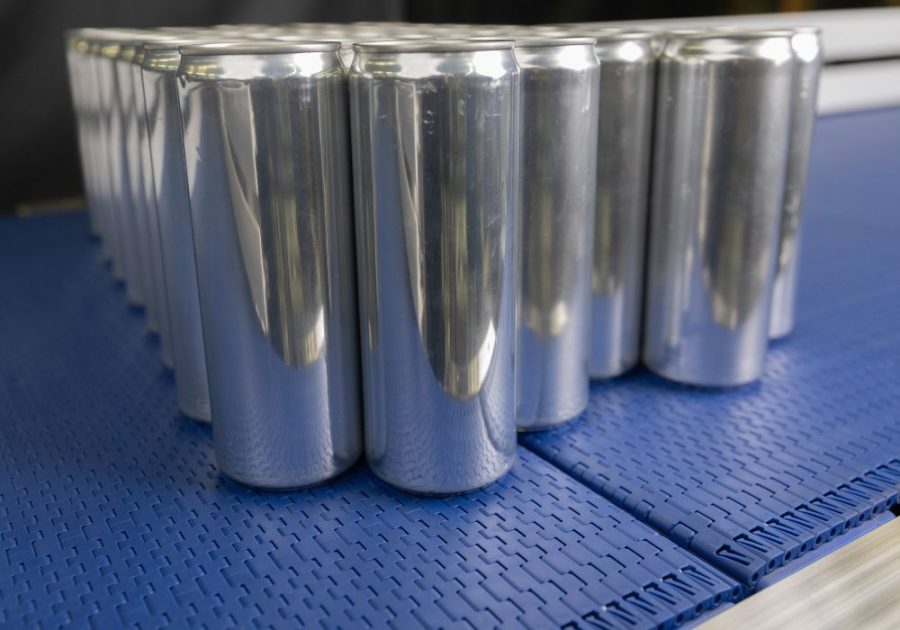
Intralox’s business unit servicing can makers has a headcount of about 50 engineers, designers, business developers and customer service professionals. Image: Intralox
The metal packaging industry is kept moving on the principle that if the lines are running, then the customer is happy and downtime costs will be low. Intralox feels a huge responsibility for turning that principle into reality.
As the provider of conveyor belts to global can makers, its products literally keep cans moving through manufacturing plants. From cupping presses to depalletisers at factories all over the world, Intralox makes modular plastic moulded belts to suit all parts of the can making line. The belts are manufactured to be durable and reliable because, as Intralox global industry team leader for can making, Jasper Joosten, explains, if they stop, then the plant stops and the cans are not produced.
“We say we are the veins of the line because of the responsibility to make those lines work 24/7, as they do, with minimal downtime,” said Joosten from the company’s recently opened European headquarters near Schiphol Airport in Amsterdam. “It is a big responsibility to supply can plants globally with our belting.”
From peeling prawns to carrying cans
Intralox was founded in 1971 in New Orleans to serve the city’s shrimp industry. Its founder, JM Lapeyre, designed a plastic belt to replace the metal systems that frequently broke down as they carried the cooked crustaceans to automatic peeling machines – another of his inventions.
Jasper Joosten has been with Intralox since October 2022. Image: Intralox
Lapeyre patented the plastic belt in 1975 and realised it could be applied to other industrial use cases. The result was the creation of Laitram, the parent company within which Intralox sits, along with Laitram Machinery, which continues to make shrimp peelers as well as other food-industry automation equipment, and Lapeyre Stair, a maker of industrial access fixtures.
Intralox remains headquartered in the Louisiana city, as does its main plastic moulding facility, and it now has regional headquarters in Shanghai and Amsterdam. It employs almost 4,000 people worldwide and uses production and assembly facilities in Baltimore, Maryland, the UK, Brazil, Australia, Japan and India.
Customers can choose from about 10,000 different conveying belts, many of them patented. Not all are made for the metal packaging industry; Intralox’s three divisions focus on logistics and materials, food and industrial applications.
While the can making supplies business is not its largest, it is the company’s most symbolic, because it is fast-moving and “never offline.”
“Can making is an industry that operates continuously – lines need to keep running,” says Joosten. “We are historically the division that is seen as an example for other divisions on how we would like to position ourselves, how we would like to manage our long-term relationships with our customers. Although we are small, we are a very well-known segment within Intralox and are very much seen as a true example of world-class global account management.”
Manufacturing of conveyor belts and parts for all of Intralox’s industrial customers is centralised at its moulding plants, but the business unit that services can makers has a headcount of about 50 engineers, designers, business developers and customer service professionals, many of whom share duties with other parts of the company.
Joosten, who has worked in the packaging industry for almost 20 years and joined Intralox four years ago, says the industry specialisation is essential for generating new ideas, which is important to a company that has set a goal of producing at least one innovation each year. “We like the idea of having team members that are well known with industry or the industry specialised because this also allows them to truly understand our customers,” he said.
Reducing can tipping and line shutdowns
Intralox’s most recent innovation is the Series 570 tight transfer system conveyor and nosebar. It was developed from the company’s food business to reduce the number of cans that topple in the conveying process, incurring costly line downtime.
The system allows for easier flow and greater accumulation of cans by aligning nose bars – which sit at the ends of lengths of belt – much closer together than traditional equipment. This enables the smooth transfer of cans from belt to belt, including to belts that convey the cans in another direction. This would ordinarily have been done via a dead plate on which cans from one belt would accumulate before reaching a critical mass that would then push them onto the next belt.
Dead plates are where most can tipping happens and their removal from lines has helped reduce snarls from falling cans by 70 per cent, according to anecdotal evidence from customers, Joosten says.
“We were recently in a meeting with a customer that has installed the first back-end with our system in one of the major can making groups, and they confirmed that they had never had so many cans from their line,” he says. “At a time where we are focusing on spoilage reduction and getting as many cans out of the raw materials that go into the line, that’s definitely a game changer.”
The tight transfer innovation had been brought to market shortly after the Covid-19 pandemic, when can makers and their customers were still basking in record volume growth as consumers continued lockdown practices of buying packaged food and beverages.
But soon after its release, the pent-up demand that had sustained the Covid-era growth ran out of steam and the can making industry went into a period of stagnation. Because Intralox’s new product was being marketed for inclusion in new lines, it initially took some time to take off as can makers held back from new capital investments.
Thankfully for the company, the picture has changed since. “It has been great to see that in the past two years, as soon as the market came back, we had great adoption of the product and also great feedback from can makers that have started to use this as a specification on their new lines,” said Joosten.
Intralox’s belts are made to measure for each of its customers’ particular needs. They are assembled to order before being installed.
New home for new products
The positive outlook for the company has been aided by the new Europe, Middle East and Africa headquarters in the Netherlands. The centre is seen as an emblem of the company’s dedication to quality and sustainability. With state-of-the-art fabrication, Joosten says it has a carbon neutral footprint, partly thanks to solar panelling and battery storage, as well as its connection to a smart energy grid that it shares with other organisations that call the Schiphol Trade Park home. The building has an Excellent rating according to the Building Research Establishment Environmental Assessment Method (BREEAM), the longest established means to testing a property’s sustainability performance.
From there, Joosten says the innovations of tomorrow are already being designed. While he cannot disclose any specifics on products in the pipeline, he says the company is continually looking to improve performance, including through new materials.
Joosten stresses that the close relationship Intralox has with the original equipment manufacturers that make its components has helped the company bring new ideas to production, and he believes they will help bring the next. “You can be sure that in the next three years we will come up with new important innovations to the can industry,” he concludes.
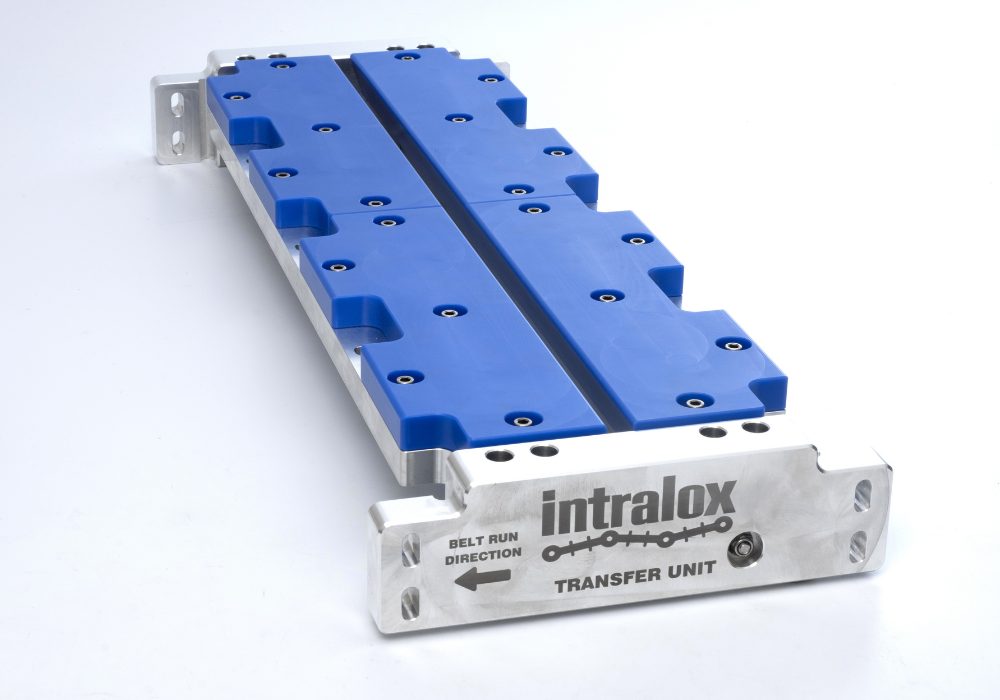
Intralox’s most recent innovation is the Series 570 tight transfer system conveyor and nosebar. Image: Intralox
Topics
industrial automation manufacturing innovation supply chain efficiency
PeopleOrganisationsRegions