Carbon infra-red emitters conquer lacquer problem
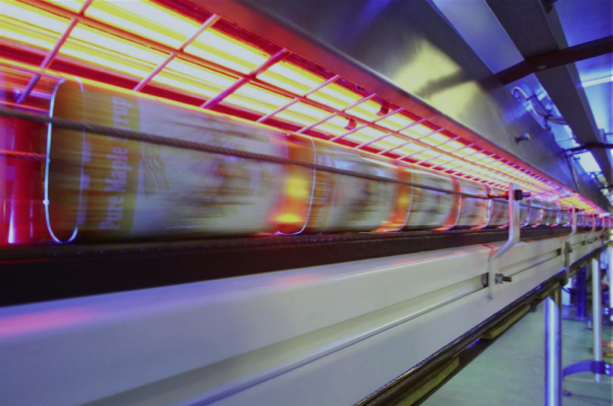
A carbon infra-red system from Heraeus Noblelight has solved the problem of curing a lacquer applied to the longitudinal weld of metal containers.
The equipment was developed when the existing foil heating system at the Aintree, UK, manufacturing plant of Crown Packaging was unable to meet the stringent curing requirements of a new lacquer formulation.
The installation has also allowed other benefits including a reduction in line downtime as the previous foil system required considerable maintenance.
The Aintree plant manufactures containers for a wide range of products from industrial oils to foodstuffs, such as maple syrup.
After being cut and formed from sheet material, the cans are longitudinally welded.
It is then important that this weld is internally coated with a lacquer, to prevent contamination of any food products and to protect the weld from attack from aggressive contents. The lacquer is applied by spray and must then be cured.
Previous curing solutions have included Radio Frequency (RF) ovens and infra-red foil heaters.
However, when the lacquer formulation was up-graded, neither of these heating systems could achieve the correct cure.
Consequently Crown contacted Heraeus, who carried out proving tests with carbon infra-red at its headquarters.
These proved so successful that a small scale test unit was supplied to Crown for on-site trials, which led to an 84kW carbon infra-red (CIR) system being installed.
This consists of three 28kW CIR modules, each fitted with two 14kW carbon infra-red emitters.
“Apart from ensuring the correct lacquer cure, the new system has also brought other significant benefits,” says Paul Kavanagh, project engineer at Crown.
“Unlike the previous foil system, which required considerable guarding to prevent unwarranted access, the new CIR modules are already totally sealed.
“In addition, we suffered considerable downtime when foils failed and had to be replaced. So far we have not had one CIR emitter failure.”