Priorities for aluminium
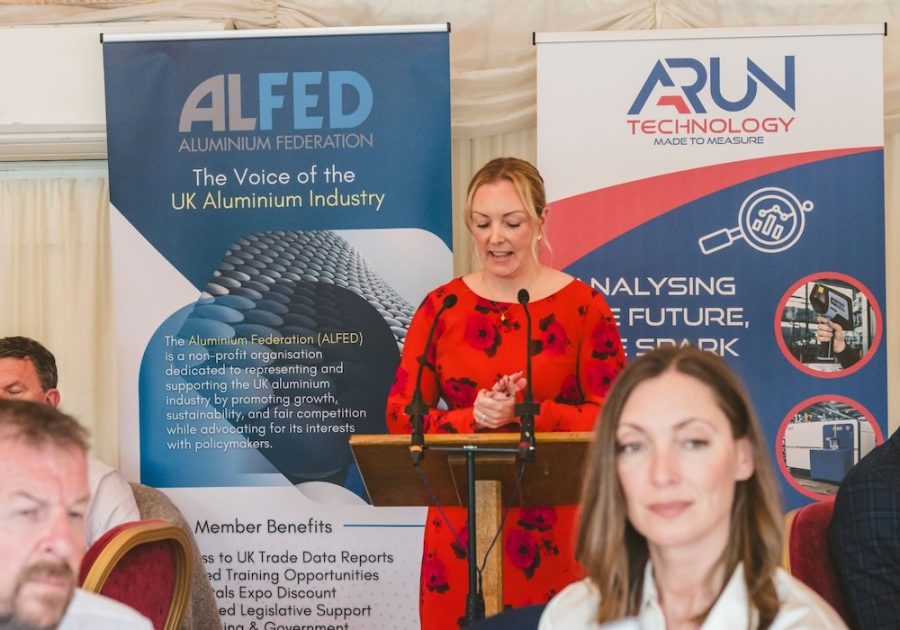
CEO Nadine Bloxsome addresses the audience. Image: ALFED
Yesterday I had the pleasure once again of attending the Aluminium Federation’s (ALFED) House of Lords lunch at the UK’s houses of parliament.
The afternoon kicked off with a welcome address from ALFED CEO, Nadine Bloxsome, who stated that the past 12 months have been a pivotal time for the industry, but that ALFED continues not to rest on its laurels but to continue ensuring the whole value chain is represented in governmental decision and policies.
The event marked the formal launch of ALFED’s Positions & Strategic Priorities Framework (2026–2027), setting out a unified, industry-led roadmap for strengthening competitiveness, resilience, and growth and ultimately ensuring, as ALFED’s Rachel Wiffen later noted, that aluminium is “recognised, supported and prioritised.”
The key phrase of the day, used by almost every speaker, was ‘industrial resilience’, and how the UK is to maintain it, by ensuring aluminium is represented as playing a critical role in UK manufacturing, defence and the net zero transition.
Chris McDonald, MP and minister for industry, spoke about boosting secondary aluminium production through recycling and improving scrap retention in the UK – a huge portion is currently exported and in fact the UK is one of the top exporters worldwide – to capture more value domestically, and enhancing competitiveness.
McDonald also stressed the need for more apprenticeship schemes and education around these within the sector, encouraging the benefits of skills programmes to grow businesses and provide more learning opportunities for young people. At the table I was sat on, we discussed this over lunch and agreed with McDonald’s sentiment, while also adding that there needs to be better communication with young people about the environmental, societal and even personal benefits (ie career and salary progression) of working in the aluminium industry.
Next to address the audience was Antonia Bance, MP for Tipton, Wednesbury and Coseley. She highlighted that there is “lots to welcome” on the UK government’s strategy for industrial manufacturing, paying particular attention to the recently launched British Industrial Competitiveness Scheme (BICS), which is set to reduce electricity costs for manufacturers.
Bance dismissed the notion of people saying that many MPs “don’t understand” industry needs, stressing that discourse needs to work both ways. She encouraged those in the room to “if you think something is missing” from policies, “speak to your local MPs” to help shape them and fight for the industry’s needs to be met. “We’re here to champion you,” she said.
ALFED’s industry & skills manager, Rachel Wiffen, provided an update on the state of the aluminium industry today. According to data she shared, there were 108,000 people working in the UK aluminium industry in 2024 – a much larger number than some experts in the audience guessed. Wiffen stated that the industry is “an enabling one,” and that these jobs contribute £9.4 billion to the UK economy. Aluminium has been recognised as a strategic material by the UK government, she noted, thanks to the industry’s efforts so far and lobbying by ALFED and its members. However, to strengthen this, “a more coordinated, collaborative effort needs to take place,” Wiffen said. “I think in this room we have a real opportunity to raise the profile of aluminium in the UK,” she concluded.
Arun Technology, metal analysis specialist, was the event sponsor of the lunch. Director, Anna Richardson, and head of operations, Kieran Kennedy, used their platform to urge that more quality infrastructure is needed to keep up with and maintain the demand for aluminium in the UK. Of course recycling matters, said [guy], but more important is whether the UK is ready to retain more scrap and accurately capture the data for future advancement.
Richardson and Kennedy also spoke about the crucial role of material verification in ensuring high-quality scrap, which will be integral to ensuring a fully circular economy. Arun’s ethos is based on the foundation that “faster, accurate on-site analysis helps recyclers, processors and manufacturers make better decisions, reduce contamination, improve material confidence and keep more value within the UK supply chain.”
The Lord Horam perhaps summed up the mood of the day best, praising ALFED for its efforts and highlighting that events like these embody the spirit of “business and politics getting together and working together.”
Thank you to ALFED for the insights, delicious food, good company and for somehow making the rain disappear in time for us to enjoy the terrace at the end of the event!
Alex Rivers (she/her), CanTech International editor
Keep in touch via email: [email protected], LinkedIn: CanTech International magazine or X: @CanTechIntl
TopicsPeople
Anna Richardson Antonia Bance John Rhodes Horam Nadine Bloxsome Rachel Wiffen
OrganisationsRegions