
The right recyclables

Ally the aluminium foil. Image: WRAP
It seems all my blogs this month have been heavily environmentally-focused, but that’s what it’s all about, so we’re continuing the trend!
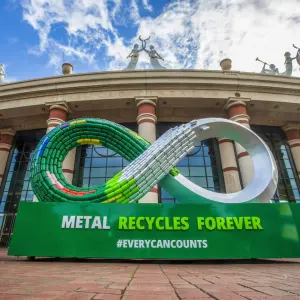
This week in the UK is Recycle Week (14-20 September), and with non-profits like Every Can Counts getting involved, we can trust that metal is being represented correctly.
Created by WRAP and now in its 23rd year, Recycle Week’s overall goal is ‘to help everyone recycle more of the right things, more often.’
From the beginning of this year, as part of the UK government’s Simpler Recycling guidance, UK households have been able to recycle or dispose of the same materials from their local collection service, with the materials being separated into:
- Food and garden waste;
- Paper and card;
- All other dry recyclable materials (metal, glass and plastic, including cartons);
- Residual waste (non-recyclable waste that is sent for energy recovery or to landfill).
However there is still work to be done to inform people of precisely what to add and not add in which bin, within these collections. WRAP’s Recycle Week team of ‘Rescue your recyclables’ characters – which include Ally the kitchen foil (pictured above) and Deo the aerosol can – provide visual campaign assets for businesses to use in their own messaging to help with this issue (for instance, the rest of the Ally carousel says: ‘Chuck me out and I’m crushed, physically and emotionally. But recycle me, and I could come back as part of a car engine! Talk about high vibrations.’ There isn’t a beverage can as part of the visuals, but maybe someone could create their own, and call it ‘Loopy’ to represent the circular loop (and credit me for the idea.)
I digress. The education is needed. Adam Herriott, Recycle Week spokesperson, said: “We’re a nation of recyclers, but our annual citizen tracker shows that the number of people who feel recycling is worthwhile has dropped from 81 per cent in 2021, to 69 per cent today. Recycling remains a key activity we can all do to play our part in reducing the amount of waste we produce, and the impact this has on the environment and climate change.”
The percentage Herriott notes here represents quite the drop. Has this been due to the ‘why should I bother when the world’s already burning’ mindset (just speculating)? If so, the media has a responsibility to step up and remind consumers of the positives of recycling, not just the warnings for if they don’t. If it’s not that, then my point still remains, but it’s a shared responsibility all round, from government to local councils, to packaging brands and businesses selling the packaging, to everyone in between. Do consumers know that eight banana peels put in the food waste and recycled into energy is enough to power a kettle to boil, for instance? Probably not.
More is being done, though. Even just reading my copy of Your Borough magazine (Gravesham council’s quarterly magazine for residents) was encouraging last week. We have been informed that we can now also place used household batteries in a clear bag taped to the top of refuse or recycling bins for safe collection from the council. The more people don’t have to go out of their way for this sort of thing, the better, it seems.
As part of Recycle Week, Recycle Now has compiled some interesting and some entertaining figures on recycling behaviours when it comes to Brits on ‘bin day’, if you’d like the read. (Although I’ve never climbed into a bin to make more room in there as the headline suggests many of us do, but have been partial to sticking a broom or rake in the garden or ‘normal’ recycling to make room.) I hope everyone in the metal packaging industry is the chief recycler in their household, as I’m certainly one of the 58 per cent in the UK who think they are.
Coming back to putting things in the wrong bins, a forthcoming Kent county campaign entitled ‘Leave it Out’ is soon set to focus on helping residents in my local area recycle with confidence by highlighting some of the most common items that should be left out of recycling bins, including soft plastics, textiles, wet wipes and food-soiled packaging.
Through a cast of (you guessed it) more mischievous ‘Recycling Rebels’ characters, the campaign will encourage residents to keep these items out of recycling bins and remember the simple rule of keeping recycling ‘clean, dry and loose.’
If your company has an initiative linked to Recycle Week, send it our way!
Alex Rivers (she/her), CanTech International editor
Keep in touch via email: [email protected], LinkedIn: CanTech International magazine or X: @CanTechIntl
