Japan’s Bottle Cans
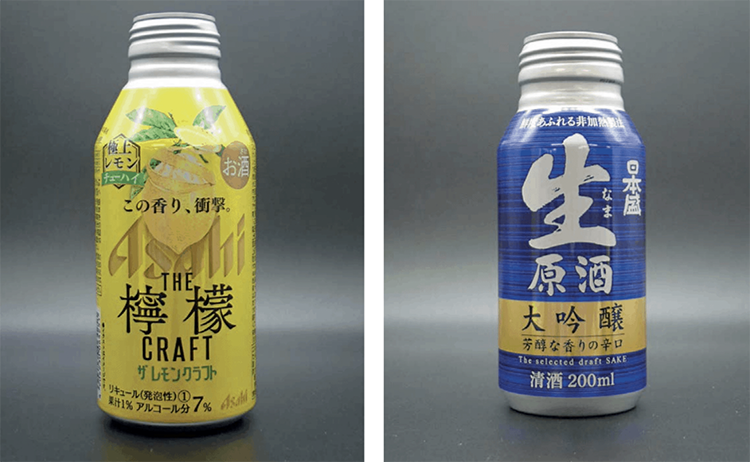
Sparkling Chu-hi mixed fruit juice and spirits drinks are driving Japan bottle can growth, says Takeuchi Press Industries. Article by David Hayes
Japan’s bottle can market has entered a new phase as a growing number of alcoholic beverage companies choose bottle cans to launch new products and attract shoppers’ attention in convenience stores and supermarkets.
Beverage companies using brightly decorated bottle cans to promote their new products include those selling carbonated mixed fruit juice and spirits drinks called “Chu-hi” in Japanese.
“Chu-hi uses traditional spirits such as Japan’s sho-chu spirit as a base to which carbonated water and flavouring is added, such as lemon or other fruits, or cola,” explained Kasumi Takeuchi, administration manager at Takeuchi Press Industries Co Ltd, the first can manufacturer to make aluminium bottle cans in Japan.
“Chu-hi is popular among a wide range of people – young people as well as older drinkers.” Takeuchi Press supplies chu-hi bottle cans to Asahi Breweries Co Ltd, one of Japan’s leading alcoholic beverage companies and the first to choose bottle can packaging for chu-hi when launching its popular new tangy lemon flavour craft chu-hi brand early last year instead of a regular SOT beverage can which is used for most chu-hi drinks.
A new image
Since then other beverage companies have begun using bottle cans for their new lemon chu-hi drinks. Being used for chu-hi has given bottle cans a new image. Originally, bottle cans were filled mostly with coffee drinks and fruit juices sold in vending machines and convenience stores.
More recently, the number of beverage companies using bottle cans in Japan has grown to include global energy drinks brands.
Takeuchi Press produces bottle cans in two sizes: 410ml 66mm diameter and 200ml 53mm diameter. The 410ml bottle can is supplied mostly for filling with chu-hi and coffee drinks, Takeuchi explained, along with fruit juices containing fruit pulp. In addition to fruit juices, the smaller 200ml bottle can size is used to fill with Japanese sake rice wine as the bottle can is similar in size to small traditional glass sake bottles served in restaurants. Both the bottle can sizes are made with a 38mm diameter threaded neck that is closed with a screw cap.
“Currently we do not make a narrow bottle can neck size as a wider diameter bottle neck is more preferred – it differentiates the bottle can from PET bottles, most of which are narrow necked,” Takeuchi noted.
“However, we used to supply and still are able to make narrow neck bottle cans if requested by a customer.
“A wide neck bottle can gives a different drinking experience as there is more flavour and aroma when drinking coffee and other drinks from a wider neck.
“A wider neck also is good for drinking fruit juices containing fruit pulp. The wide 38mm diameter neck is the bottle can’s advantage.”
A long history
Originally established in 1873 in Toyama, northcentral Japan, as a hardware retailer, Takeuchi Press is celebrating its 148th anniversary this year. The company owns five factories today including the Namerikawa beverage can plant that is equipped with three bottle can lines and one SOT (Stay On Top opening tab) beverage can line that together are capable of producing about 500 million beverage cans a year in total. In addition to the two bottle cans sizes, three 53mm diameter slim line SOT can sizes are produced: 135ml, 160ml and 200ml, mostly to fill with soft drinks.
“Our SOT cans are used to fill with either carbonated or non-carbonated soft drinks, and with alcoholic beverages such as beer and whisky soda,” Takeuchi said.
Aerosol cans are made at the firm’s Namerikawa-Hongo plant in Toyama and the Fujioka plant in Gunma which together are equipped with seven aerosol can lines.
The Fujioka plant was expanded in 2018 with the installation of a fourth aerosol can line and a nine colour can printer. The company’s other factories’ products include aluminium tubes and marking pen bodies.
Production and R&D
As part of efforts to increase production efficiency and reduce materials costs, Takeuchi Press’s bottle can R&D programme includes an ongoing project to reduce the bottle can body wall thickness. “We currently are working on lightening the weight of both our bottle can sizes. We are reducing the thickness of the material used so our customers can save on materials costs. It makes economic sense and it’s good for the environment,” Takeuchi commented.
“We already have achieved a five per cent weight reduction with the 200ml bottle can size; our next step is a further six per cent weight reduction.”
Takeuchi Press’s R&D team recently also has succeeded in reducing the weight of the 410ml bottle can size by nine per cent. The company currently is in the process of obtaining customers’ approval for the new lighter weight bottle can in preparation to begin commercial production.
“These changes require some new technology to achieve the same can body performance quality using lighter weight aluminium sheeting. It requires improvement in the aluminium sheets we use as well,” Takeuchi said.
By coincidence, Takeuchi Press launched its bottle can production cost reduction programme prior to the first of several major changes that have affected Japan’s beverage can market during the past four years. These changes include the introduction of PET bottle packaging for coffee drinks by beverage companies, which competes directly with coffee drink bottle cans, and more recently the impact of the Covid-19 pandemic on overall canned beverages consumption.
In 2017, after several beverage companies previously had tried unsuccessfully to introduce a coffee drink in a PET bottle, Japan’s Suntory Group finally succeeded in developing an attractively designed PET bottle coffee drink product which soon gained a growing share of the aluminium bottle can coffee drink market, assisted by clever marketing and attractive pricing.
“Suntory’s PET bottle coffee drink product was launched in 2017 and its effect, including similar moves by other coffee drinks brands, was amplified in 2018,” Takeuchi commented.
Other beverage companies followed Suntory’s lead, launching their own PET bottle coffee drinks in the hope of profiting from the new trend. However, not every brand succeeded with its PET bottle coffee drink launch and sales growth eventually levelled off in 2019. Some coffee drinks brands since then have decided to refocus on bottle can coffee drinks giving bottle cans a reduced but stable coffee drinks market share.
Overall production of bottle cans at the Takeuchi Press Namerikawa plant increased last year as the growing popularity of bottle can chu-hi drinks boosted sales of the company’s 410ml chu-hi bottle cans.
“Our total bottle can production volume increased in 2020 thanks to the new lemon flavour carbonated chuhi beverage, but coffee drink bottle can demand decreased significantly,” Takeuchi commented.
“PET bottle coffee drinks have gained popularity among young consumers but have not eradicated bottle cans from the coffee drinks market.
“Although demand has dampened, DI bottle cans will remain with a presence in the coffee drinks market in future.”
Demand for drink cans
In addition to reduced sales due to earlier growth in PET bottle coffee drinks consumption, demand for coffee drinks bottle cans has been further hit by the Covid-19 pandemic over the past 18 months. A large share of bottle can coffee drinks and other soft drinks in SOT two-piece cans are sold by vending machines and convenience stores located in office buildings. Canned drinks sales in these locations have fallen sharply during the past 18 months as many office workers now are working from home. Although canned soft drinks purchases have decreased during the pandemic, sales of soft drinks in family size PET bottles have grown as more people buy larger-size soft drink packs to consume at home. Interestingly, the consumption trend for canned alcoholic beverages during the pandemic is the reverse that of canned soft drinks, according to beverage companies. Sales of canned beer, for example, have risen during the pandemic as more beer is drunk in the home due to government trading restrictions imposed on bars and restaurants to prevent the spread of Covid-19.
“Aluminium SOT cans are used mainly for alcoholic beverages. The Covid-19 pandemic has made the Japanese government require restaurants and drinking places in “emergency status” areas such as Tokyo shorten their opening hours and refrain from offering alcohol, so alcoholic beverage consumption increased at home,” Takeuchi said.
“Our regular SOT beverage can sales have decreased, however. We do not have SOT can orders for major alcoholic product cans filled for home consumption, so we could not enjoy the demand spike for beer cans and other alcoholic beverage cans brought about by Covid-19.
“Rather, we supply soft drinks cans for vending machine sales and alcohol beverage cans for restaurant use, but demand for these cans has fallen due to Covid-19.”
Demand for aerosol bottle cans
Meanwhile, demand for Takeuchi Press’s aluminium aerosol cans also has been affected by the Covid-19 pandemic along with an earlier decrease in foreign tourist purchases of Japanese beauty products not long after the firm expanded its aero-sol can production capacity three years ago.
“Our new aerosol can production line installed in 2018 in our Fujioka plant broadened our range of aerosol can shapes,” Takeuchi said.
“The constriction shape, which has a narrow waist area towards the top of the can to aid hand grip, is popular not only for personal care product aerosol cans but also insecticide spray products.”
Rising sales of Japanese aerosol personal care and beauty products to Chinese visitors in the mid-2010’s raised demand for aerosol cans until the Chinese government introduced new regulations in 2019 requiring peer-to-peer E-commerce traders to be officially registered and pay tax on their profits earned from importing foreign-made luxury goods, including beauty products, for sale through domestic channels.
Demand for aerosol cans has further reduced during the pandemic as sales of personal care aerosol products such as hair spray and sunscreen sprays have fallen due to government instructions calling on people to work at home and to restrict outside social contact.
“Major aluminium aerosol product categories are related to going-out occasions, such as hair styling products and sunscreen sprays,” Takeuchi said. “Production of these decreased as demand for these aerosol products has reduced.
“On the other hand, aerosol products used at home, such as insecticide sprays, have enjoyed an increase in demand.”
Future growth
Meanwhile, the future post-pandemic growth of bottle can use and of other aluminium cans in Japan still is uncertain although public awareness of the environmental impact of plastic packaging including PET bottles is growing.
“More consumers in Japan are getting more conscious about the environmental effects of plastic but it hasn’t developed to shape a strong ‘anti-plastics packages’ sentiment yet,” Takeuchi commented.
“However, there are groups of people promoting ‘plastic free’ initiatives. Some vending machine owners, for example, require beverage companies to fill their machines with canned drinks only.”
The use of aluminium cans and tubes to replace other plastic packaging which is not as easy to collect and recycle as PET bottles may also attract more interest in future.
“Some cosmetics companies and pharmaceutical companies are seeking conventional plastic alternatives such as aluminium, biomass plastics and bio-degradable plastic packaging,” Takeuchi noted.
“We are getting inquiries for our aluminium bottles and tubes as an option for conventional plastic package replacement.
“However, we still are not sure whether this will lead to more aluminium packaging consumption growth in future.”
TopicsPeopleOrganisationsRegions