Impactful choices
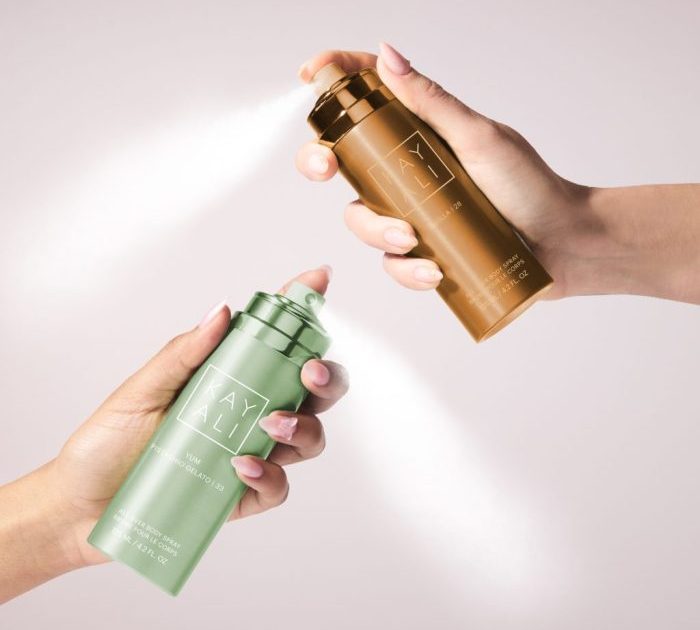
Aptar’s All Over Spray is being used to dispense Kayali’s hair and body mists. Image: Aptar/Kayali
The first purpose of metal packaging for the beauty and personal care industries, when it was first introduced in the mid to late 19th century, was simply to protect the product inside, but it quickly became more of an attractive, premium option. As it would have been the upper echelons of society who could afford such consumer items, metal became synonymous with a luxurious packaging choice. Many tins became decorative and offered exclusive limited edition runs as a way for brands to maximise their exposure in this market.
A name that has been around almost since the advent of these products is Beiersdorf’s Nivea tin, which celebrated its 100th anniversary in 2025. The 1925 tin that featured a deep blue with white, simple lettering, is still recognised globally despite its design upgrades throughout the years.
However, what was once a small luxury item at the time of its inception – in 1925, a 150ml tin cost around 1.20 Reichsmarks, nearly two per cent of an average monthly income at the time – has become part of everyday consumers’ personal care and beauty regimes.
Grita Loebsack, president of Nivea and member of the executive board of Beiersdorf, commented: “When I see the blue tin, I see the essence of what Nivea stands for: consistent quality, emotional connection and everyday relevance. It’s a design that connects generations and has stood the test of time. Celebrating this anniversary is not only about honouring a bold decision made a hundred years ago, but also about recognising the loyalty of our consumers worldwide. The blue tin is not just a part of our history – it’s a part of millions of people’s daily lives.”
The blue tins begin their journey in Hamburg, where Beiersdorf’s production site manufactures the iconic packaging. From there, the tins are shipped to markets around the world and filled locally with Nivea Creme – a process that blends heritage with global reach. According to Beiersdorf, in 2024, each second, more than four blue tins were sold around the world – both online and offline.
Shortly after the emergence of the beauty tin came the aluminium tube. One of the earliest applications of this product began in the late 19th to early 20th century for toothpaste, the use of which was reportedly inspired by paint tubes, where metal was already being utilised to success.
Thereafter, the aluminium tube gained rapid traction in the pharmaceutical industry, lauded for its excellent hygiene and barrier properties. Later, in the mid 20th century, it entered the beauty and cosmetics segments, being used to package various ointments and creams.
Now, tubes have many more versatile applications, with the market expected to reach US$1.4 billion by 2033, according to Future Market Insights.
One leader in this space is Austria-headquartered Tubex, which has expertise
spanning seven decades across the cosmetics, food, pharmaceutical and industrial sectors. Tubex’s efforts in modern refill solutions have been recognised since first being introduced in 2023 with the Mono Refill.
The Mono Refill is made of a single material (100 per cent recycled aluminium, 95 per cent of which is PCR) and features no plastic cap, which makes it not only easier to recycle but promotes sustainable habits within consumers’ beauty and personal care regimes.
It works by including a snap-off closure on the tube’s neck applicator, before the tube itself acts as a refill for an original cosmetic container, be it aluminium, glass or plastic. “After refilling, consumers can flip the closure over and insert it back into the tube, so everything gets recycled together,” the company said.
Innovators have not stopped at tubes, though. Swedish packaging technology company, Meadow, through its partnership with Ball Corporation, features the design of a beverage can as a pre-fill solution for its Meadow Kapsul beauty, personal and home care concept. The can is housed inside a customised dispenser which is designed to be reused by the consumer.
This product concept has been covered previously by CanTech, but Meadow continues to innovate and develop global partnerships, its most recent ones being based in the US to expand its market presence there. The first is with the Stephen Gould Corporation, which will see Stephen Gould license Meadow’s Meadow Kapsul technology and handle dispenser production for brands worldwide, strengthening Meadow’s end-to-end supply chain from can-making and co-packing to dispenser manufacturing.
Meadow CEO and co-founder, Victor Ljungberg, commented: “Partnering with Stephen Gould Corporation propels Meadow’s Meadow Kapsul technology into the US market at a crucial time for American companies. As we have seen in Europe, Extended Producer Responsibility schemes are driving a shift towards sustainable packaging formats – US brands that adopt early will have the edge when EPR legislation becomes widespread and enforced.”
Meadow’s Kapsul is now also being promoted by East Coast Canning, which will print and fill customers’ cans before pairing them with the reusable dispenser technology.
Moving from the beverage can to aerosols now, which gained success in the beauty and personal care sector by the mid-20th century when more lightweight, mass-producible valves and containers became commercially available in products such as shaving foam and hairspray.
One company pioneering innovation in the aerosol beauty space is Aptar, headquartered in Illinois in the US, with over 13,000 employees spanning 20 countries. CanTech spoke to Aptar Beauty’s director of aerosol sales, Giampaolo Volante (based in Italy), about the company’s turnkey aerosol solutions.
Aptar’s latest partnership, Volante said, is with Dubai-based brand, Kayali. The brand is using Aptar’s All Over Spray – the “premium aerosol packaging delivering a continuous spray with 360-degree dispensing” – for its collection of body and hair mists. The All Over Spray dispenses signature scents such as White Flower, Pistachio Gelato, Burning Cherry and Vanilla in a cloudlike spray.
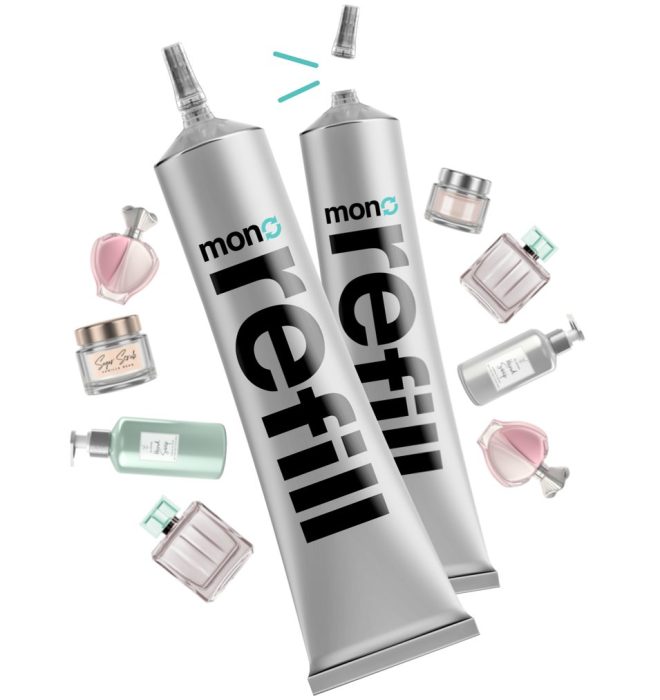
Tubex’s Mono Refill solution is made of 100% recycled aluminium, 95% of which is PCR. Image: Tubex
“It is composed of a bagon-valve system integrated with the metal bottle body, metal collar and shelled metal actuator. This is an upgrade of what we bring to the market in terms of enriching the aerosol commodity image,” said Volante, who added that premiumisation is still a key driver for its customers, who are mainly based in Europe, the Middle East and North America and range from “prestige names to indie brands.”
Aptar’s components are manufactured predominantly in Europe (90 per cent) and China (ten per cent), according to Volante. “However, our Western suppliers are also developing their own solutions in some out-of-EU countries with the sole aim to maintain the same quality they’re familiar with in the European market. The mandatory standards and AQL [acceptable quality level] we apply for such production are a straightforward copy of the current standards we have in Europe,” he said.
Around 65 per cent of Aptar’s metal sourcing is in-house, with dedicated Aptar plants in Europe to produce metal components, new types of valves and packaging effects such as stamping and anodisation. “It’s an incredible way of adding value for our customers,” Volante remarked.
He said that Aptar is exploring “combination products currently, such as the Airless Glass dispenser featuring a metal pump,” noting that circularity remains a core part of Aptar’s ethos, as well as challenging consumer perceptions of premium and pushing boundaries.
However, the challenges ahead “are many,” he said. Volante listed the EU and UK’s CBAM tariff, which will form part of the EU Green Deal, and the US tariffs (Section 232), which will lead to “increased costs for premium, speciality packaging.” There will also be a limited number of raw material suppliers due to these “tight and prescribed specifications,” he said, which could create long lead times and unfortunately lower visibility for customers.
When asked how he sees demand for metal packaging in the beauty segment evolving over the next five to ten years, Volante concluded: “We predict a demand decrease for the mass market segment versus a rise in niche premiumisation. Consumers will want unique products that not only improve their overall user experience but boast sustainability credentials too.”
People
Giampaolo Volante Grita Loebsack Victor Ljungberg
OrganisationsAptar ball corporation Beiersdorf Meadow Nivea Stephen Gould Corporation Tubex
Regions