Caps uniting brand and consumer

Pelliconi operates manufacturing plants in Italy, Egypt, China, South Africa, the US and Canada. Images courtesy of Pelliconi
Founded in 1939 by Angelo Pelliconi in Bologna, Italy, Pelliconi has grown from a small crown-cap manufacturer into a global leader in metal and plastic closures for the food and beverage industry. Today, the company produces over 30 billion caps annually and operates manufacturing plants in Italy, Egypt, China, South Africa, the US and Canada.
Over its 86-year history, Pelliconi has expanded internationally, introduced major product innovations such as ring-pull caps, the Flower Cap, and plastic-free solutions like Sopure. The company has continuously invested in new technologies and facilities worldwide. The Pelliconi group now owns nine production plants across four continents and exports to over 100 countries. CanTech International spoke to the company’s innovation, go to market and strategy manager, Lorenzo Monti, about its range and operations.
What are Pelliconi’s technical and marketing innovations?
At drinktec in Munich last year, Pelliconi presented a set of marketing innovations that reposition the closure from a passive component of the packaging to an active digital touchpoint along the consumer journey. The underlying concept was deliberately provocative: caps are used in billions of units every day, yet each of them represents an untapped moment of interaction between brand and consumer.
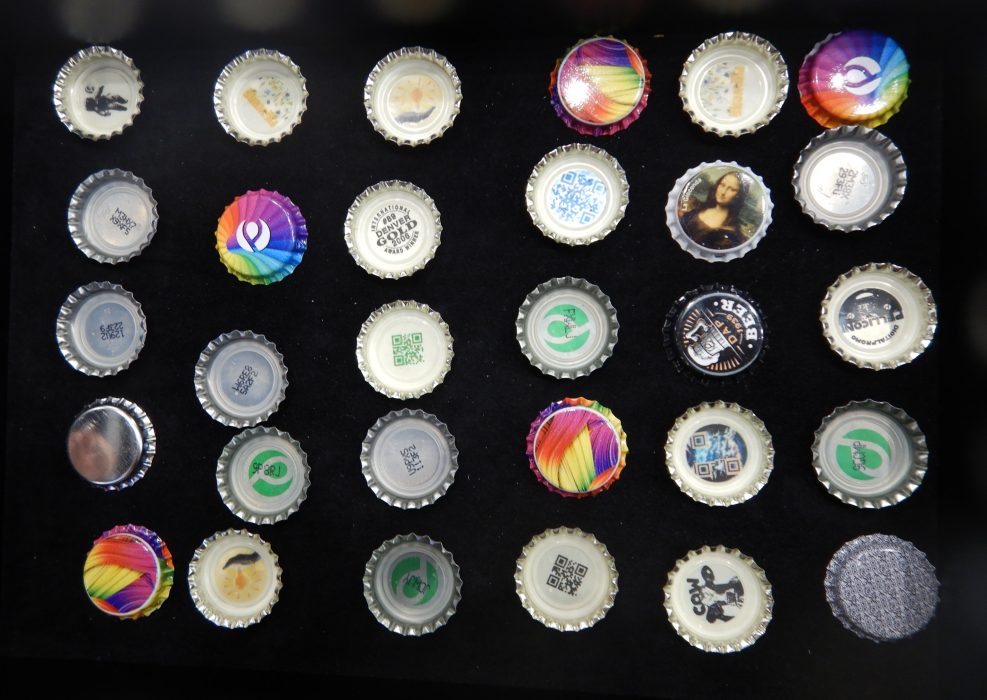
From a technological standpoint, the key innovation lies in the combination of high-speed variable digital printing (KaleiDots) with P-Code, Pelliconi’s proprietary platform for generating and managing billions of unique, dynamic QR codes. This enables single-unit serialisation, where every individual cap carries its own unique digital identity. Unlike traditional QR implementations at SKU or batch level, this 1:1 granularity allows brands to interact with consumers at the level of the individual product unit.
In marketing terms, this approach transforms the cap into a “proof of consumption” and a gateway to personalised digital experiences. For promotions, unique QR codes under the cap enable instant-win mechanics, loyalty programmes and gamified campaigns where each scan is both verifiable and non-replicable. Importantly, products remain visually identical on shelf, which encourages scanning behaviour regardless of whether a cap is winning or not, thereby increasing participation rates and data acquisition. The availability of real-time metadata – such as timestamp, geolocation and product ID – makes it possible to activate contextual and localised marketing actions.
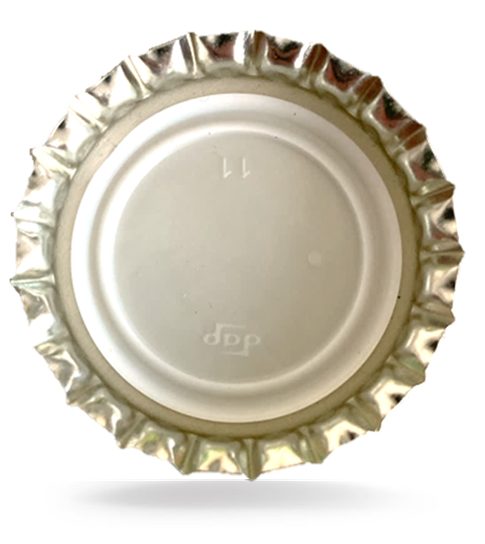
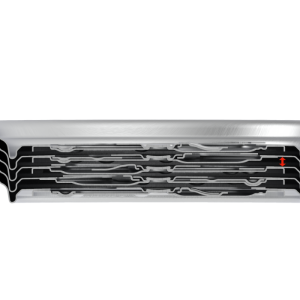
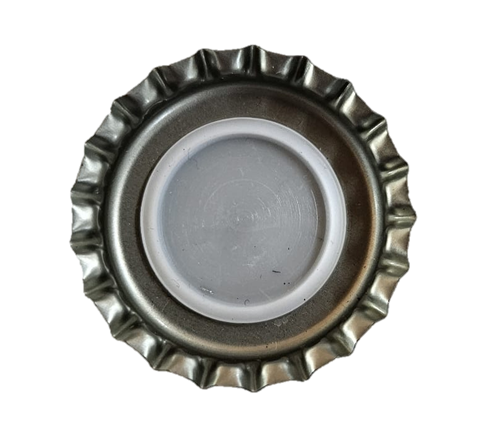
Pelliconi recently introduced EcoCrown, which is based on the LightCrown concept (above) but integrates an innovative, patented liner called EcoSeal (below)
How do these innovations create consumer connections?
Consumer engagement is also extended into sustainability communication, which is increasingly central to brand strategy. Through serialised QR codes, brands can provide transparent and traceable information on materials, carbon footprint and social impact, while also using scans as an incentive mechanism for responsible behaviours such as correct recycling.
The same infrastructure allows dynamic guidance tailored to the consumer’s location, for instance indicating the correct waste stream for the specific municipality where the product is consumed. From a marketing science perspective, this represents a shift from static sustainability claims to interactive, behaviour-oriented engagement models.
Is brand protection and market integrity also a focus?
Yes, these technologies for brand protection and market integrity, indirectly reinforce consumer trust and brand equity. Single-unit QR codes make it possible to detect counterfeit products, unauthorised code reuse and grey-market distribution by analysing anomalous scan patterns and geospatial data.
While this is often framed as a supply-chain or compliance tool, it has clear marketing implications: protecting brand authenticity and ensuring that consumer interactions occur within the intended market context.
Could you discuss some of Pelliconi’s projects?
When it comes to packaging but even more so with closures, innovation must be pragmatic, measurable and industrially scalable. These dimensions are increasingly interdependent and must progress together in order to create real value for brand owners and bottlers.
One example is the Flower Cap, already well known to the market: a 0.15mm closure featuring a distinctive, soft design that improves look and feel while significantly reducing material usage and overall life cycle impact. Another is the LightCrown, represents a major step forward in metal closure design: a crown cap with an ultrathin 0.15mm profile, engineered to combine material reduction with full performance in terms of sealing, processability and line efficiency.
Alongside this, we recently introduced EcoCrown, which is based on the LightCrown concept but integrates an innovative, patented liner called EcoSeal, enabling a significant reduction in the amount of plastic used in the sealing gasket. EcoSeal is not a single solution, but rather a family of PVC-free gasket and sealing liners, designed to be adaptable across different closure types.
In parallel, we are advancing another stream of innovation focused on consumer experience, featuring reduced-effort or simplified opening technologies, as well as solutions linked to sonic branding and sensorial differentiation.
How does Pelliconi eliminate environmental impact while maintaining performance, safety and scalability?
Eliminating environmental impact entirely is a highly ambitious goal, and one that cannot be addressed through a single technology or material choice. At the same time, safeguarding consumer health remains our top priority. In our view, the most credible path forward is a holistic approach to packaging, one that considers the entire product life cycle – from design and production to use, collection, sorting and effective recycling. There are, in fact, multiple levers to reduce environmental impact, and they must work together.
Design choices, consumer information and infrastructure compatibility all play a critical role in this process. The majority of Pelliconi’s closures are made of metal, a material that offers an excellent balance between consumer safety, product protection and environmental performance. Metal is infinitely recyclable and its value within recycling streams makes it one of the most effective materials in a circular economy. At the same time, our innovation efforts – also in response to evolving regulatory frameworks such as the EU Packaging and Packaging Waste Regulation (PPWR) are focused on solutions that promote monomaterial packaging architectures, plastic reduction and the use of recycled plastic content where technically and legally permitted. These developments aim to preserve performance, safety and industrial scalability while improving overall environmental outcomes.
Digital technologies also play an increasingly important role. Thanks to the ability to serialise our closures with QR codes, we can provide consumers with transparent supply-chain information and brands can use these tools to actively educate and engage consumers in responsible recycling behaviours, for example, through incentive-based systems or gamification.
Pelliconi’s philosophy behind its motto ‘Innovation, Life.’
Created for the company’s 85th birthday, Lorenzo Monti explains that: “‘Life’ is a word ready to embrace everything from the small gesture of opening or closing a bottle to the grand gesture of improving the planet in which we live in. ‘Innovation’ is the tool that enables us to achieve our goals. A single comma separates the two words, indicating that Pelliconi innovations will be increasingly at the service of life: to make it better, to make it more beautiful. Together, they express Pelliconi’s commitment to developing solutions that improve quality of life and contribute to a more sustainable and beautiful world.”
What about the environmental impact within your manufacturing operations?
A significant part of our environmental impact reduction takes place within our manufacturing operations. At Pelliconi, we are continuously working to reduce scope 1 and scope 2 emissions, while also addressing scope 3 emissions through partnerships with responsible suppliers, transport optimisation and advanced waste management practices. The integration of ESG criteria is a guiding principle in our strategic decisions and defines the direction of our future development. These efforts and their measurable outcomes are transparently reported in our annual Sustainability Report, which reflects our commitment to delivering real, verifiable impact.
Which emerging markets and consumer habits will most influence the evolution of closures over the next decade?
The evolution of closures over the next decade will be shaped by a combination of emerging markets, shifting consumption habits and the increasing demand for smarter, more sustainable packaging. From a geographic perspective, fast-growing regions in Asia, Latin America and Africa will continue to play a decisive role, both in terms of volume and in setting trends for innovative product formats and convenience-oriented solutions.
At the same time, changes in consumption habits in mature markets, including smaller pack sizes, on-the-go consumption, premiumisation and the search for convenience, will require closures that deliver enhanced user experience, accessibility and performance, without compromising environmental responsibility. As said earlier, we also expect a growing awareness among brands of the potential of “smart packaging.”
Finally, all of these developments will be supported by R&D-intensive innovation, including materials optimisation, mono-material solutions, plastic reduction and digital integration. In other words, the future of closures will not only be about keeping pace with emerging consumption patterns, but also about creating added value at every step of the packaging lifecycle, from production to end-of-life, and ultimately strengthening the connection between brands and their consumers.
Topics
cap manufacturing innovation packaging QR codes
PeopleAngelo Pelliconi Dominique Huret Lorenzo Monti
OrganisationsRegions