Remaining globally competitive
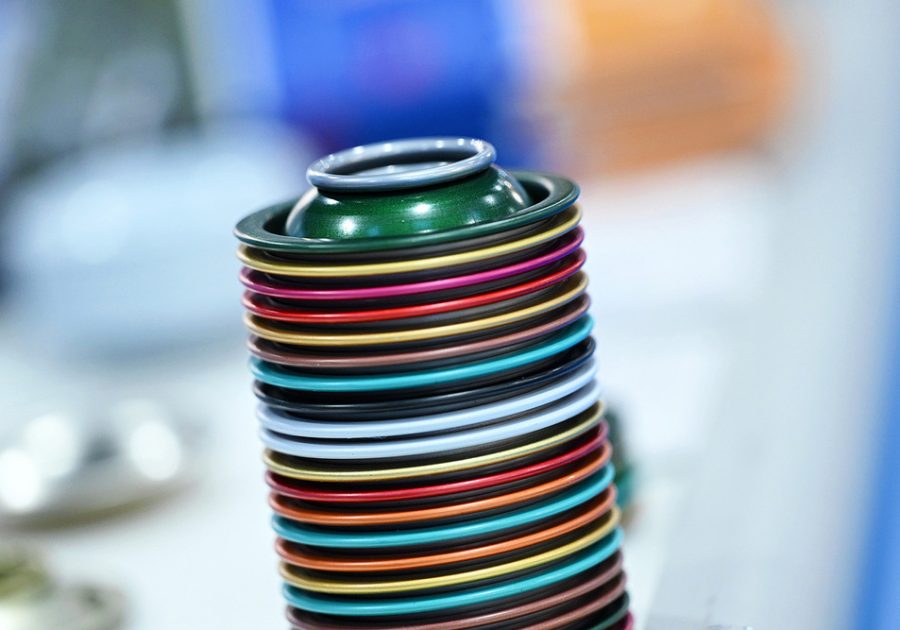
Can tops. Image: Easyfairs
ArcelorMittal Europe is the European branch of the ArcelorMittal steel group, one of the world’s leading steel producers. It supplies flat and long steel products for the automotive, construction and packaging industries, while investing heavily in decarbonisation and low-carbon steel in Europe. Richard Lézé, the company’s chief marketing officer for packaging, and president of Steel for Packaging Europe (SfPE), shared his views with CanTech International about market developments, global competition, technologies and future prospects.
Over the last five years, how would you assess the development of the European metal packaging market?
The European metal packaging market has undergone significant transformation in a context marked by successive disruptions: inflation, geopolitical tensions, new regulatory frameworks (PPWR, REACH), environmental pressures and rapidly evolving consumer behaviour.
Despite these challenges, the sector has demonstrated strong resilience, with different dynamics across segments and regions.
Food remains the largest segment within steel-based packaging, and the inherent strengths of steel – infinite recyclability, efficient local recycling loops and robust performance – continue to reinforce its relevance in key applications such as aerosols, closures and general line. Regional trends, however, differ considerably. In Southern Europe, for example, weather-driven fluctuations in agricultural harvests have had a direct impact on volumes, amplifying year-to-year variability.
Faced with global competition, particularly from Asia, what are the main competitive advantages of European metal packaging producers?
European producers differentiate themselves through quality, sustainability leadership, regulatory compliance and innovation. These are all increasingly valued by brands, consumers and policymakers. However, to remain globally competitive, the sector must address structural cost disadvantages, defend itself against low priced imports and ensure future-proof capacity utilisation in a market shaped by both regulatory transformation and shifting demand patterns.
What technological innovations or materials do you think are most promising for strengthening the competitiveness of ArcelorMittal and European metal packaging in general?
There are several promising innovations for strengthening Europe’s competitiveness in steel for packaging. One finds the high-strength downgauged steels, chrome-free and next generation coatings, digitalised processes and low carbon emission solutions. Thanks to its top R&D, close collaboration with customers and early alignment with Europe’s evolving regulatory framework, ArcelorMittal Europe is very well positioned on the market. These strengths provide a solid foundation for maintaining Europe’s leadership in responsible, high-performance metal packaging.
Along with can maker Massilly, ArcelorMittal won the 2026 ADF’s Sustainable Innovation certificate for aerosol tops made with its High Strength Steel technology. What was the objective?
The objective of ArcelorMittal’s certificate-winning high-strength steel for aerosol top was to achieve a minimum 10% reduction in steel usage per aerosol top (Ø48, 15-bar), while maintaining the same level of performance and safety. This material and design optimisation enable a significant and quantifiable reduction in Scope 3 greenhouse gas emissions, directly supporting customers’ decarbonisation targets.
The project also aimed to reach the theoretical forming and performance limits predicted by finite-element modelling, demonstrating how advanced steel design and mechanical optimisation can unlock new lightweighting possibilities for the packaging sector.
With growing demands for circular economy and recyclability, how is ArcelorMittal adapting to environmental standards (green taxonomies, EPR, etc)? What major changes do you anticipate by 2030?
ArcelorMittal is already deeply engaged in the transition toward a fully circular, low carbon and regulation compliant packaging ecosystem.
The combined pressure of evolving EU regulations – including PPWR, REACH, ETS and EPR – together with new financial frameworks such as the EU Green Taxonomy, is accelerating this transformation. In response, the company is adapting across all dimensions: product design, manufacturing processes, environmental reporting and engagement throughout the entire supply chain.
In particular, the PPWR requires that all packaging be fully recyclable by 2030, with recyclability performance grades and ‘recycling-at-scale’ obligations coming into effect by 2035. Steel is already well positioned under this framework, as aerosols, cans and metal-based composites are among the formats that naturally meet the PPWR’s recognised recyclability criteria.
The costs of raw materials and supply chain disruptions remain sources of uncertainty. How are you managing these issues and what strategies are you adopting to secure your supplies?
ArcelorMittal manages raw material and supply chain uncertainty through a combination of vigilance, flexibility and long-term strategic choices. We constantly monitor global trade flows and import dynamics so we can anticipate shifts in the market rather than react to them.
We are actively following EU trade discussions and ensuring our position is understood, because maintaining a fair competitive environment is essential at a time of persistent global overcapacity and low-priced imports. Close coordination with our customers is another key part of our approach. Finally, our lightweighting efforts, advanced high-strength steel grades and progress on decarbonisation all help cushion the impact of raw material cost cycles. Using less steel per unit and offering low-carbon solutions makes our supply more resilient in the long run.
To what extent is digitalisation transforming ArcelorMittal Europe operations and products? What performance or quality gains are you already seeing?
Digitalisation is increasingly shaping how ArcelorMittal Europe produces steel. Across its European operations, the group is embedding smart factories, advanced automation and proprietary artificial intelligence directly into production, moving beyond traditional automation toward data-driven, adaptive steelmaking. AI is now used to optimise key stages of the steel value chain, including production scheduling, predictive maintenance and real-time process control. The impact is already visible in product quality and operational performance. Digital tools are also supporting energy efficiency and CO2 reduction, particularly through optimised furnace operation and scrap selection.
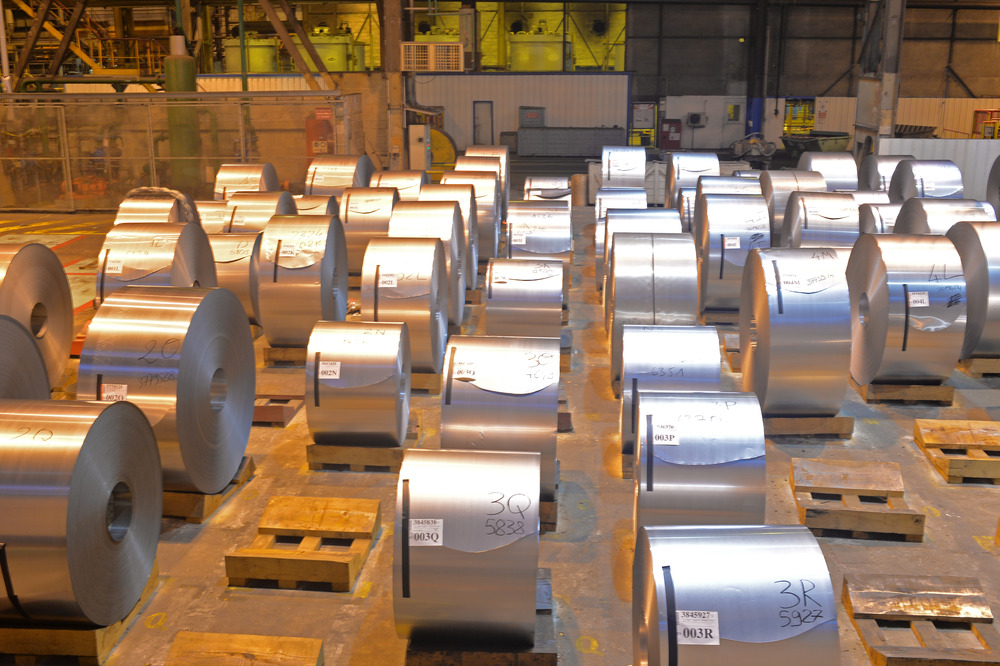
ArcelorMittal steel for packaging. Image: Eric Perraud
Customer expectations regarding customisation, sustainability and packaging safety are changing rapidly. What emerging demands are you seeing most and how are you responding to them?
Three themes stand out across the metal packaging value chain: customisation, sustainability and safety. Brands increasingly want packaging solutions that reflect their identity while meeting ever-stricter performance requirements. Therefore, we offer tailor-made steels, surfaces and mechanical properties for applications from food to aerosols and closures. At the same time, sustainability has become a decisive factor, driven by both regulation and consumer requirements. Steel’s infinite recyclability, its leading recycling rates in Europe and our low-carbon XCarb offer position us strongly to help customers meet PPWR targets and reduce their CO2 footprint.
Finally, expectations around safety and compliance continue to rise, especially in food contact. Our portfolio of chromium-free steels and our investment in next-generation coatings ensure full alignment with the highest health and regulatory standards. Together, these developments allow us to support brands seeking packaging that is high-performing, fully compliant and future-proof.
In your opinion, is collaboration sufficient between European’s raw material suppliers, converters, recyclers and brands?
Collaboration across Europe’s metal-packaging value chain is improving, but it’s still not where it needs to be. The challenges we face – from decarbonisation to full PPWR compliance – cannot be solved in silos. We need tighter, earlier cooperation between raw-material suppliers, can makers, fillers, recyclers and brands. Models already exist, what we need now is to scale these approaches – co-developing materials, aligning on recyclability criteria, sharing data on carbon footprints and running joint industrial validations. Only a coordinated ecosystem will allow European metal packaging to stay competitive, sustainable and future-proof.
Faced with growing competition for skilled talent (engineers, technicians, R&D experts), how does ArcelorMittal approach the issue of recruitment and training? Does the metal packaging industry attract enough specialised profiles?
Like the entire European industry, we face growing competition for engineers, technicians and R&D specialists. ArcelorMittal addresses this in two ways: by strengthening its ability to attract talent and by investing heavily in continuous training. Across the group, we run structured development programmes, knowledge-transfer processes and hands-on technical training led by experienced specialists. We also work closely with universities, technical schools and industry associations to make metal packaging better known as an innovative field that combines material science, sustainability, digitalisation and advanced manufacturing.
The sector does not attract enough specialised profiles. That is precisely why we need to communicate more clearly about the opportunities it offers. The shift toward low-carbon steel, circularity and next-generation coatings is creating highly stimulating roles for young engineers and researchers. By collaborating more closely across the value chain and accelerating joint R&D and training initiatives, we can make the metal packaging ecosystem more visible, more innovative and more attractive to the next generation of technical talent.
Any other concluding points?
In terms of supply chain, ArcelorMittal is taking a multi-layered approach, to remain reliable and competitive, even in a highly volatile global environment. For market prospects, we see the strongest momentum in food, aerosols and closures – segments where steel’s safety, full recyclability and regulatory readiness give it a clear edge, while sustainability-driven niches such as premium and high-performance applications are emerging as particularly attractive growth areas.
Looking ahead, the sector is well positioned to respond to changing consumer expectations and an increasingly demanding regulatory environment. Steel’s strong sustainability credentials, combined with ongoing innovation – including chrome-free technologies, downgauging and advanced coating systems – will continue to support its competitiveness and relevance in the years to come.