Beyond the expected

Improvements are needed in digital colour management, including the adoption of spectral data and cloud-based colour libraries, said INX’s Ryan Ostrowski. Image: Scanrail- stock.adobe.com
As we have seen on previous pages of this magazine so far, the inks and coatings sector within metal packaging is facing tighter constraints where the many upcoming global regulations are concerned, but this isn’t stopping producers in the area from working ahead and innovating beyond standard expectations.
Aside from sustainability and regulation pressures, including BPA-NI coatings, low migration inks and recyclability, “Brand differentiation and premiumisation, especially within craft beverages, are increasing the use of speciality finishes and expanded colour palettes. Digitalisation is currently enabling shorter runs, personalisation and faster changeovers, while automation and smart manufacturing are improving efficiency, quality control and waste reduction,” said Ryan Ostrowski, R&D lab manager for metal decoration at INX International Ink Co.
UV & UV LED
The demand for UV and UV LED coatings for can making operations is one segment topic picking up pace, as is apparent by the plethora of latest developments recently shared with CanTech International.
Speaking to CanTech at the 2026 Metpack fair in May, Actega’s product manager for energy curing coatings & sustainability, Emilie Vedel Blankschon, shared that UV and UV LED coatings such as its ACTNext were a central pillar to its business. For applications such as general line cans, aerosol cans, drums, closures and the exterior surfaces of selected food cans, the ACTNext range eliminates the need for large, energy-intensive drying ovens.
This innovation addresses the industry’s high energy consumption and environmental impact by substantially lowering carbon footprints and VOC emissions while maximising line efficiency, without compromising surface quality or performance. Additionally, as Blankschon told CanTech, UV equipment, being “slightly smaller than an oven,” helps customers “save space in their production.”
Another German-headquartered manufacturer, hubergroup, presented its latest solutions at Metpack, with a particular focus on its NewV tin LED MGA, a LED-curing ink series for food packaging, designed for three-piece can applications. This innovation responds particularly to sensitive food applications where safety, efficiency and sustainability are critical, the company said. The series complies with the requirements of the German Ink Ordinance (GIO), the Swiss Ordinance, and the guidelines of renowned brand manufacturers, the company’s product manager for metal decoration, Jan Museler, told CanTech.
“With NewV tin LED MGA, we are giving metal decorators a reliable, futureproof LED solution that meets the stringent safety requirements of food packaging while delivering excellent printing performance,” said Museler. “It’s an important step in supporting the industry’s transition to LEDUV technologies.”
Also based in Germany (Düsseldorf), industrial printing inks specialist, Triton, has recently announced a significant expansion to its infrastructure. At the heart of this is its new, 2,900 square-metre ‘Ink-Cube,’ representing an investment of approximately EU€7.6 million.
This state-of-the-art, semi-automated facility is specifically engineered for the production of UV and UV-LED inks for industrial digital printing. As part of the expansion, a portion of the cartridge production will also be relocated to the new premises. According to the company, this new infrastructure allows Tritron to more than double its previous production capacity, enabling the simultaneous manufacturing of up to six large ink batches. To ensure maximum operational reliability, existing facilities will be retained as a strategic backup.
“The Ink-Cube is our direct response to the surging global demand for our digital printing inks. Our goal is to elevate customer satisfaction and on-time delivery to a new level through this substantial capacity expansions,” explained Dr Jens Simon, Triton’s managing director.
In China, HMD Inks has recently announced the introduction of its new UV lacquer solution, which is set to enhance process efficiency through advanced instant-cure technology. HMD’s UV lacquer cures within two to five seconds under UV lamps. With no oven required, manufacturers are able to lower overall energy consumption by up to 80 per cent.
In addition, the coating contains 98 per cent solids with very low VOC emissions, helping manufacturers avoid the need for costly RTO systems while supporting sustainability and environmental audit requirements without additional CapEx investment. The system is FDA CFR 175 compliant and BPA free, providing future potential for extension into food can applications.
The addition of this UV lacquer, as well as additional capabilities for HMD in waterbased monobloc coatings for aerosol and tube applications, is part of an RMB90 million (approximately US$12.5 million) expansion project from the company to increase production capacity from 5,000 to 20,000 tons per annum.
HMD Inks’ director of international sales and marketing, David Quek, told CanTech: “Depending on final approval from government agencies, HMD plans to commence construction in January 2027. Phase 1 is expected to be completed by January 2028, which will increase our total capacity to 15,000 tons per annum. Phase 2 will begin around mid-2028, and full 20,000-ton capacity is targeted by the end of 2029. All timelines are subject to final government approvals, which we anticipate by Q3 2026.
“These initiatives are central to our environmental objectives. By advancing UV and water-based technologies, we are actively helping our customers reduce their carbon footprint and lower VOC emissions across the supply chain.”
Consistency, standardisation & future-proofing
What is apparent from all the UV and UV LED developments is that compliance with regulations must always be a key consideration, but more than that, coatings and inks manufacturers must go “beyond compliance,” as was US-headquartered, global manufacturer Sun Chemical’s main message at Metpack 2026.
“The concept of ‘doing more than is needed’ can be quite alien,” Shaun Sandison, Sun Chemical’s global business manager for two-piece inks, told CanTech, “but actually, it pays off because if it’s on our agenda today, it means it’s going to be a priority for tomorrow. If you think ahead, future challenges will have already been solved before they arise.”
INX’s Ostrowski agreed with this sentiment, telling CanTech: “It is critical that ink manufacturers stay ahead of regulations. Proactive compliance prevents supply chain disruptions, protects customer brands, and ensures safety standards are met across global markets. Leading in this area also allows companies like INX to innovate faster and maintain a competitive advantage.”
Hubergroup’s Museler also noted that the benefits of switching from conventional systems to LED are being increasingly recognised, particularly given rising energy costs globally. Even though times are changeable, he said, “We must always ask ourselves, if this happens, how will we handle that? How do we set our own standards and produce a safe, future-proof product for customers and consumers?”
Speaking specifically on the topic of colour consistency, INX’s Ostrowski commented: “Improvements are needed in digital colour management, including the adoption of spectral data and cloud-based colour libraries. Greater process stability and reduced variability in substrates and curing are also essential. Expanded gamut printing and better collaboration across the supply chain will help achieve more consistent and repeatable colour outcomes.”
Museler noted that AI holds possibilities for improving colour communication and setting standards; the capabilities aren’t quite there yet, “but I think that will also be one of the main topics for discussion in the near future,” the hubergroup specialist said.
Sun Chemical’s Sandison also highlighted that there is currently no current standard for matt or gloss varnish in metal decoration. “You can’t ask ‘How matt is this?’ because it just is matt. And suppliers of the varnish may not be operating as sustainably as they could in this area, because they want to supply the best varnish visibly possible, but then this standard might not be replicable the next time, leading to disappointed customers and further confusion.”
Noting its work with X-Rite on PantoneLive, Sandison added: “Everything we do around the can is about consistency and reproducibility and creating a universal language so that we needn’t be afraid of misunderstanding one another.” He highlighted the importance of the spirit of collaboration within the industry and willingness to share, believe and trust in the same vision.
When asked how far he agreed with the statement that the future of metal decoration is digital, INX’s Ostrowski stated: “I believe the future is not entirely digital but hybrid. Digital printing excels in short runs, customisation and rapid design changes, while traditional methods remain dominant for high-volume production due to cost efficiency. The industry will increasingly combine both approaches to optimise flexibility and scale.”
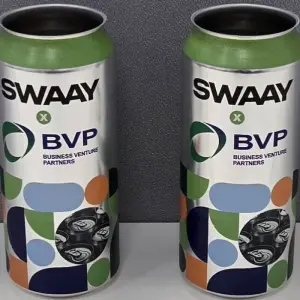
Another key way to anticipate the future of metal decoration is to pay attention to design patterns, even within smaller segments of the market. Ostrowski concluded our discussion by noting that recent entries to its Colored by INX Can Design Contest “show strong trends toward bold and vibrant colour palettes, matte versus gloss contrasts, tactile and illustrative storytelling designs. Retro and nostalgic elements are popular alongside minimalist, typography-driven aesthetics. Sustainability messaging is also becoming more visible in design choices.”