Poised for expansion

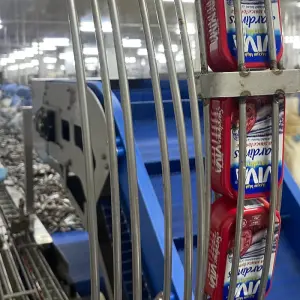
Image: zmotions-stock.adobe.com
Two-piece beverage can and three-piece tinplate coil capacities in Thailand are expected to see significant growth over the next few years. David Hayes reports
Thailand’s can industry is preparing to enter an important new expansion phase following recent reported announcements by two foreign can manufacturers of plans to open two new aluminium can plants over the next two years. The three-piece food can industry also is due to receive a boost following the Kingdom’s largest tinplate manufacturer’s announcement of plans for a 25% increase in production capacity by early 2027 to support Thailand’s large, canned food export industry.
Thailand’s steel can industry experienced a marked recovery in 2024 after slow export market conditions and food material supply issues caused food can fillers to reduce their can consumption during the three previous years.
“Total usage of tinplate and tin-free steel (TFS) increased to 512,325 tons in 2024, up 11% from 458,695 tons in 2023. A significant trend is the increased reliance on domestic supply, which has grown, while the volume of imported material has decreased,” commented Thanasak Rojvoraporn, secretary of the Thai Metal Packaging Association (TMPA), which represents Thailand’s tinplate and TFS can making industry, and deputy managing director of Tin Can Industry, which manufactures general line cans.
Thailand is the world’s largest exporter of canned tuna, with a 30% share of global canned tuna exports by volume and a 25.5% share by value.
The country also is a major supplier of other canned seafood products, canned pineapple, canned sweet corn and canned pet food.
In addition to food cans, Thai can makers produce general cans to fill with dried food, including confectionery, and speciality decorative cans. Paints, motor oil and edible oil are among other major products filled in steel cans.
During the past decade, total tinplate and TFS consumption used for can making has fluctuated between 500,000 to 600,000 tons most years, according to figures published by Thailand Customs.
After a decline in consumption from 2021 to 2023 due to the impact of the global Covid-19 pandemic, tinplate and TFS use rebounded strongly last year, especially to make food cans, which account for about 70% of Thailand’s total three-piece can production.
Commenting on 2021 to 2024 canned food export data, Thanasak noted that exports of canned tuna and pet food both showed strong growth, reaching a four-year peak in 2024.
Canned sweetcorn exports remained relatively stable over the same period, while canned pineapple exports have followed a downward trend, due to competition from other lower cost pineapple exporting countries.
According to Thailand’s Department of Fisheries, the nation’s seafood exports reached US$7.14 billion in 2024, representing a 12% increase over the previous year and the highest annual total for the past ten years, buoyed by a sharp increase in canned tuna exports, which reached 548,000 tons worth US$2.45 billion in 2024, representing a 32% growth in volume and a 34% increase in value compared to the previous year.
Tariffs, trade & material supply

Image: NajmiArif-stock.adobe.com
Whether and to what degree the United States’ recent imposition of higher tariffs on Thai imports negatively impacts the Kingdom’s canned tuna exports to the US remains to be seen. The US is the world’s largest canned tuna import market accounting for an estimated 13% share of global canned tuna imports by volume in 2024 and a 12.5% share by value.
According to Thailand’s Bank of Ayudhya Krungsri Research Division, in 2024, Thai canned tuna imports held a 47.3% share by value and a 49.4% share by volume of the US canned tuna import market.
Krungsri recently forecasted that the new US import tariffs would not affect the volume of Thai canned tuna imports entering the US market due to the Kingdom’s exporters’ keen pricing and high quality standards, which should ensure that Thai canned tuna remains competitive with other important exporters – including Ecuador and China – when the different US import tariff rates are taken into account.
In addition to US import tariffs, can making materials supplies are another important issue for TMPA members, who have been increasing the use of local tinplate to produce their growing customer orders for food cans.
Thailand’s EOE can end imports have risen at the same time, however, creating competition for the Kingdom’s own can end producers, as China’s can end makers increase their export efforts after recently investing in new production facilities.
“Key issues for our members are centred on the materials supply chain,” Thanasak said. “While our reliance on domestic supply is growing, a significant portion – an estimated 40 to 50 per cent – of our tinplate/TFS is still imported, which can impact the price and availability of supplies.
“Additionally, the rising volume of imported aluminium can ends is a challenge we are closely monitoring,” he said.
Thailand’s domestic tinplate supply is scheduled to increase in future following a recent announcement in April from NS-Siam United Steel, a subsidiary of Nippon Steel Corporation of Japan, of plans to invest around THB 2 billion (about JPY 8.9 billion) to expand its electrolytic tinplate production capacity in Thailand.
The expansion scheme includes the renovation of the NS-SUS Line 1 EPL and Line 2 EPL tinplate lines to meet growing customer demand, especially from can makers, for tinplate steel coils used to produce three-piece and other cans.
“Thailand is a major export base for food cans. Both the demand and market for [metal] container tinplate steel are expected to continue growing and expanding steadily,” Nippon Steel said in a statement. “As a result, NS-SUS will increase its tinplate steel production capacity from the current 280,000 tons per year, to 350,000 tons per year, with the capital investment for this expansion scheduled for completion in March 2027.”
Meanwhile, as part of efforts to ensure the future development of Thailand’s three-piece can industry, TMPA works to promote the benefits of metal packaging over alternative materials including plastics, paper and glass. “The future growth and profitability of our industry will be driven by sustainability and innovation,” Thanasak said.
“Our TMPA members are focused on developing ‘green’ products and processes, advancing ecodesign, and contributing to a circular economy through effective packaging waste management.
“Addressing these challenges will ensure the long-term success of the Thai tin can industry,” he said.
Workforce development, information sharing and regulatory updates are other areas where TMPA aims to support association members. “We are committed to upskilling our industry’s workforce,” Thanasak explained.
“A key initiative is our seamer training course which we organise in collaboration with the Thai Food Processors Association, and Thai Tuna Industry Association. As part of information sharing, we provide our members with valuable market intelligence including data presentations on raw steel materials usage to support their business planning.
“For regulatory updates and future preparedness, we proactively help our members stay ahead of new requirements. This includes inviting academic experts to provide updates on upcoming regulations and holding sessions on future topics such as preparing for the implementation of carbon credits.”

Image: David Hayes
Beverage can plants
Meanwhile, Thailand’s two-piece can industry is preparing to enter a new expansion phase following recent reported announcements by two major foreign can makers detailing plans to open two new beverage can plants by the end of 2027.
Buoyed by growing canned exports of its internationally famous energy drinks brands, Thailand is expected to become the latest country in Southeast Asia to expand its two-piece production capacity by attracting a major mainland Chinese can maker investor, as China’s leading can manufacturers look overseas for new two-piece investment opportunities.
ORG, one of China’s big four can manufacturers, is reported to be planning to invest US$150 million to build two-piece can plants in Thailand and in Kazakhstan, marking its entry into the Southeast Asian and Central Asia can markets.
ORG will become the first Chinese can maker to build a two-piece plant in Thailand, having decided on the Kingdom following mainland rival Baosteel’s investments in neighbouring Malaysia, Cambodia and Vietnam. The firm has recently started to build its second plants in both of the latter countries.
ORG’s choice of Thailand could be influenced by its business relationship with the Red Bull energy drink brand in China, where ORG is one of the Thai brand’s leading beverage can suppliers. ORG has installed two- and three-piece can lines in a number of its plants around China to supply Thailand’s TCP Group, which manufactures and distributes Red Bull.
Many of the three-piece beverage can lines produce 250ml 206 stubby cans for Red Bull. In addition, ORG has converted a slim can line in its Hubei plant to produce 330ml sleek cans to fill with TCP’s War Horse energy drink for sale in China.
Also reportedly planning a new beverage can plant is Crown Holdings, which currently owns several two-piece can lines in Thailand, including a single-line beverage can plant in Nong Khai, Northeastern Thailand, on the border with Laos, which opened in July 2020.
Crown recently jointly invested with the TCP Group to build the 820 million cans-per-year Crown TCP beverage can plant in Nong Khae Industrial Estate in Saraburi Province. Opened in 2023, the plant supplies its entire two-piece output to fill with Red Bull energy drinks for export to the Asia-Pacific region. The factory is designed for eventual expansion to produce 1.5 billion cans per year, depending on Red Bull sales growth in future.
Thailand’s Carabao Group, manufacturer of Carabao Dang beverages including Carabao energy drink, was the first Thai energy drink producer to set up its own beverage can production facilities as part of plans to establish a fully integrated beverage business including packaging.
Now aiming to become Thailand’s energy drinks market leader, Carabao Group originally established Asia Can Manufacturing Co in 2017 with Japan’s Showa Aluminium Can Corp and Showa Denko Corporation to jointly install and operate a high-speed, two-piece can line in its Carabao energy drink filling plant near Bangkok.
Installed by Showa Denko and commissioned in 2019 with a planned eventual capacity of one billion cans per year, Carabao’s beverage can line is designed to make 250ml stubby cans to fill with energy drinks for domestic sale and worldwide export.
In 2021, following Apollo Asset Management’s takeover of Showa Aluminium Can and Showa Denko Corporation’s other aluminium-related assets, Showa Aluminium Can Corp was renamed as Altemira Can, while Showa Denko Corp was renamed as Resonac Holdings.

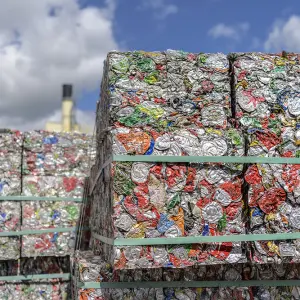
Image: Bowonpat-stock.adobe.com
TopicsPeople
David Hayes Thanasak Rojvoraporn
OrganisationsAltemira Can Apollo Asset Management Asia Can Manufacturing Bank of Ayudhya Krungsri Baosteel Carabao Group crown holdings Nippon Steel ORG red bull Resonac Holdings TCP Group Thai Food Processors’ Association Thai Metal Packaging Association Thai Tuna Industry Association
Regions