An illustrious career

Group shot from the seminar about food cans in Mumbai, January 1995
Evert van de Weg speaks to Chitra Kannan, vice president of Shetron, about the history of her success in the Mumbai-based can manufacturing company, up to the present day
Images courtesy of Shetron
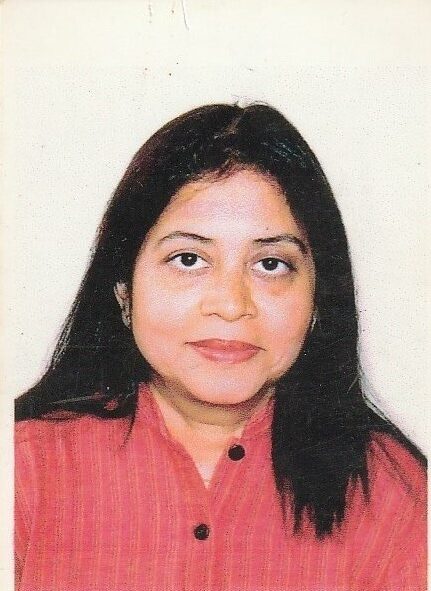
Ms Chitra Kannan
I went to Mumbai for the first time in 1995 to present at the conference ‘Tinplate Cans for Packaging of Foods,’ organised by the Indian can maker, Shetron, in collaboration with the Indian Institute of Packaging in Mumbai.
This is when I met Chitra Kannan. She was one of the senior managers of Shetron. In the margin of other business visits to the head office of Shetron in Mumbai, Kannan showed us some of the touristic highlights of the city.
With her professional help and negotiating skills, I bought some leather items on the famous Dharavi leather market at a reasonable price. During our meetings, I learned how her career within Shetron developed, parallel to the development of Shetron itself.
The Shetron Group was founded by Diwakar S Shetty, who settled in Mumbai in 1962, coming from the state of Karnataka in South India. After gaining much experience in various roles, Diwakar Shetty set up his own company, and eventually founded the company, Fibre Foils, which later incorporated the company, Shetron. In a new plant built in Bangalore, Shetron focused on the production of dry cell battery products and later, on a large scale, food cans and lug caps, in which the group became a major player in the Indian market. In 2019, the company Shetron/Fibre Foils celebrated its 50th anniversary. This golden jubilee was celebrated with the publication of a book entitled, Fifty years ago, it began with a dream…
Today, Shetron is one of the leaders in the Indian food can market and twist-off caps market, aside from being the lead supplier of dry cell metal battery jackets and components in India.
Chitra Kannan worked in a sales job before joining Fibre Foils in 1982, at the head office in Mumbai. She said she enjoyed working with clients, and became gradually responsible for more key accounts within India and overseas. For the past 15 years, Chitra has worked in senior positions, practicing client management and business development, and has been exposed to best industry practices by extensive business travels throughout India and abroad. She was eventually promoted to the position of vice president of Shetron, which she still holds now.
I recently reconnected with Chitra to offer CanTech International readers an insight into her career.
What led you to apply at Shetron? “After completing my graduation and pursuing a management course, I was looking for an interest- ing and challenging opportunity. Packaging was poised to emerge as India’s sunshine industry. Fibre Foils, as it was called then, was a leader in this sector and thus began my journey.”
In what department did you begin at Fibre Foils?
“I started as personal assistant to Diwakar Shetty, then managing director of Fibre Foils. At that time, the company was mainly producing composite cans and paper tubes. One such client was procuring paper tubes for their defence batteries and approached us for their metal tops and bottoms. We were already making these for the composite cans. This began our foray into dry cell battery components. Subsequently, several multinational dry cell battery companies had set up their manufacturing facilities in India.
“With the advent of high drainage equipment, keeping in view the basic requirement of leak- proof batteries, the Indian market began to shift from paper to metal for the outer jacket of dry cell batteries. Going with this stream, we decided to establish a new manufacturing company – Shetron – specially focussed on printed metal jackets and components. Diwakar Shetty was overseeing this business. Substantial growth in this segment led him to look for a bigger team and thus began my involvement in the business.
“I have always received support from our senior management team, which has contributed to my growth and helped me succeed and grow within the organisation. I of course understood that I had to have extensive knowledge about our product and the customers. I immersed myself in all the details – the raw material to the finished product. In that way, I built up a certain authority.”

Shetron’s plant in Bangalore
Can you divulge more about your career path in relation to the development of Shetron?
“As my responsibility grew, the focus of my objectives also changed. Earlier, battery producers often bought tinplate and produced jackets and components for their own batteries. We started to position ourselves as a supplier of ready jackets and components. Our new approach came at the right time; customers were better off leaving the production of these items to a specialised company and thus converted their fixed cost to variable cost. Most of the dry cell battery companies were multinationals, with plants all over the world. This gave us an opportunity for foray into international markets.
“This business expanded my horizon. I was mainly focused on business development and marketing of dry cell battery products in India and overseas. With our specialisation and investments in ultra-modern production lines, we are a reliable supplier of high- quality products at much lower cost. Our flexibility is our biggest advantage – we have our own tool making facility, printing lines, litho shop, blanks and jacket making and components production lines. Important in this context is to underscore that Shetron is the only company in Asia for such an integrated facility for dry cell battery products. Another important factor for our customers is that we have plants in both Southern and Western India. All these factors make us the lead supplier of dry cell metal battery jackets and components in the Indian market.
“To equip myself completely for this role, I was involved in the sourcing of our main raw material, tinplate, for some time, and also handling the operations at our battery products plant near Mumbai. A dynamic environment and exposure to multi-disciplinary portfolios has provided me enough scope for independent thinking.”
Were you always well accepted by customers in your role?
“I firmly believe that your work speaks for yourself. As an organisation, we have established an inclusive ecosystem and respect unique differences and diverse opinions, which has helped me to better support our clients.”
What would you say to those who might consider you an ‘exception’ as a senior female manager in this industry?
“I would not consider myself as an ‘exception.’ Women have been working in this industry for years, of course maybe more within production lines until recently. Our type of industry is technical and does not offer a lot of glamour, but companies are now moving towards a more inclusive growth, leading to the creation of any egalitarian, equal opportunity culture. In my view, there are no real barriers within the industry.”