Soudronic introduces GreenPeel food can
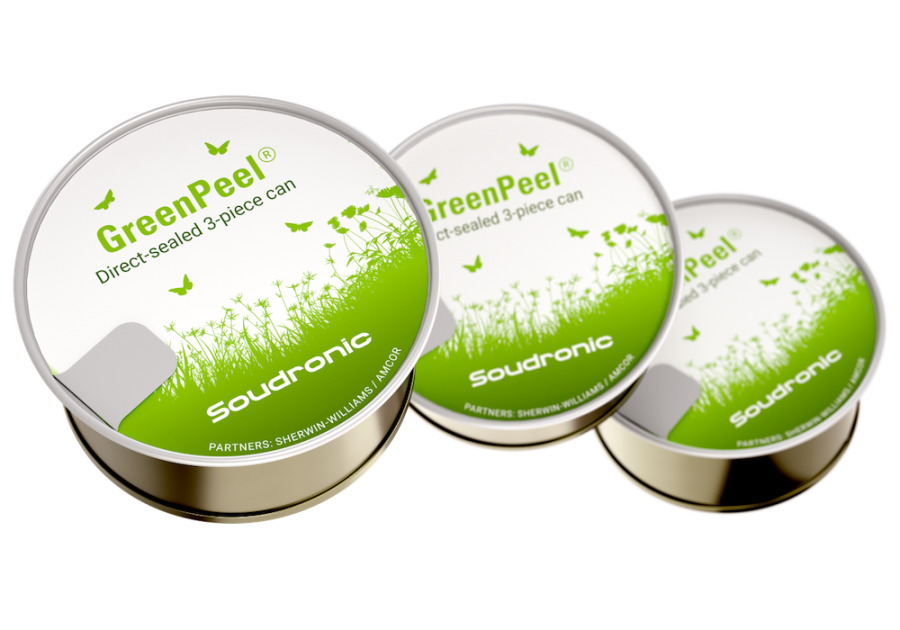
Image: Soudronic
Soudronic has introduced its latest innovation in the form of GreenPeel, the first direct-sealed three-piece can concept which offers up to a 7% lower carbon footprint and is 100% recyclable.
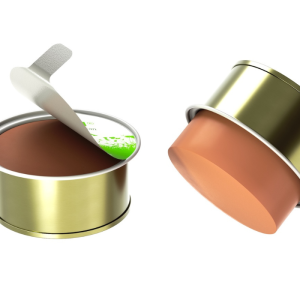
Unlike conventional three-piece cans, GreenPeel cans have no weld seam. This design enables trouble-free direct sealing before filling and full-surface decoration around the entire can. Additionally, GreenPeel allows filling from the bottom.
Production of GreenPeel cans requires up to 10% less material, resulting in a carbon footprint up to 7% lower. Product waste during the filling process is minimised since the direct-sealed lid undergoes leak testing before filling. Production speed after the filling process is also higher compared to two-piece cans.
Currently, challenging food formulations, such as those with acidic contents, require easy-open ends (EOEs) rather than peel-off ends (POEs). This is where GreenPeel shows its strengths, says Soudronic: the can resists aggressive retort products because there are no exposed cut edges inside the can that could oxidise. It can be used as a substitute for EOE cans.
The manufacturing process for the GreenPeel, as described by Soudronic, is as follows:
- Production begins with a deep-drawn tinplate can.
- In the next step, the bottom is cut off and formed into an end in a separate process.
- The crucial difference follows: the trouble-free direct sealing of the can body. Because the can body has no weld seam, the sealing foil can be applied with maximum precision and consistency. This design offers the same handling and performance as peel-off ends (POE).
- Airtightness is verified in the subsequent step and before filling, resulting in greater reliability and reduced product waste in the downstream filling process.
- A unique feature of the concept is bottom-side filling. The food is introduced from the opposite end of the can body, producing a more appealing, textured surface when opening a can of tuna, for example.
- While the production speed of conventional two-piece cans usually needs to be reduced after filling due to the subsequent sealing process, GreenPeel allows for higher production speeds. Thanks to bottom-side filling, only the less critical seaming process with the previously formed end is performed. This results in improved process stability. Minimal changes to the seamer, if any, are required.
- The interior surface of the can is completely smooth, with no edges. As a result, there is no risk of oxidation of exposed cut surfaces, and the product release is easy and complete.
- The can body and end are made from the same material and manufactured within the same production line, simplifying material handling and supporting an efficient overall production process.