
Lifting the lid on testing opportunities
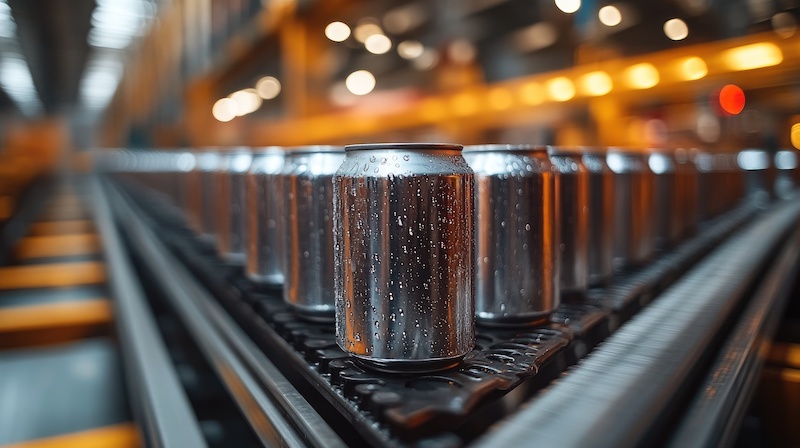
For can makers, non-destructive testing methods offer significant opportunities within the production process. Image: AImmersive Imagery/stock. adobe.com
Industrial Physics’ Steve Davis examines innovation opportunities for can making professionals in the coming years and the likely results for the industry.
Can making is on the cusp of major growth. Projections indicate that the global metal can market will be worth $81.5 billion in less than ten years, an increase of $15 billion on its value in 2023.
The demand for metal cans in the packaging sector is driven by a number of factors, including sustainability and production efficiency. With increasing scrutiny of materials used in industries where single-use packaging is particularly popular, such as food and beverage, the recyclable nature of aluminium cans has made them even more desirable over PET or coated-paper alternatives. This has led to the introduction of novel metal packaging applications such as canned water in recent years.
Furthermore, the optimisation of production processes for metal cans over the past decade has led to significant efficiencies in material usage – largely as a result of methods such as lightweighting. However, test and measurement approaches have also evolved in this time, offering packaging professionals a wide range of advantages still to be gained by introducing a new technology or trialling a new approach.
Original research answering questions In 2024, Industrial Physics released new research that shared insight from 380 food and beverage packaging professionals across the world – this revealed that almost half believed their company was planning to take an innovative approach in the next three years.
Internal and external factors are all playing a role when it comes to timescales and potential for innovation. Some professionals are being held back by a lack of in-house knowledge and therefore needing to outsource the expertise required externally, for example. What is clear from speaking to the experienced industry experts who contributed to the food and beverage packaging series, is that businesses may be hesitating on which approach to proceed with because they need to get the decision absolutely right. In the turbulent global climate, with such high levels of competition in packaging, there is no room for wasted resources and flawed innovation plans.
The significant resource and investment required for the majority of innovation opportunities means that the decision to proceed is rarely simple. However, with a greater awareness of the different types of testing opportunities available and what each of these entails, packaging companies can make a decision that best aligns with their own broader company objectives.
Innovation drivers
Packaging innovation in the coming years will continue to be influenced by internal and external factors, including the progression and integration of advanced technologies, consumer expectations, and the evolution of packaging regulations.
Industry experts who contributed to the 2024 research series agreed that consumer preferences and reactions to packaging are having an increasing influence on the innovation strategies developed. As a result, more packaging companies are taking the initiative to conduct their own research with consumers to gauge reactions before undertaking a cost and time intensive innovation approach that may not be received positively. By conducting research with consumers directly, packaging companies can better gauge the future response of a new packaging development prior to investment. Innovation in can making is also being influenced by the development and tightening of regulation and compliance measures – which in themselves are being introduced to improve safety and sustainability. The optimisation of the metal can production process over the previous decade has meant that the sector is already significantly ahead in terms of recyclability and the efficient use of materials. Packaging companies are adjusting their plans and innovating to meet new regulations, such as the EU Packaging and Packaging Waste Regulation – and it is important that can makers don’t miss out on opportunities afforded by technological developments to continually improve their operations too.
Opportunities
Non-destructive testing methods offer significant opportunities within the production process. Essential features of cans such as thickness can be tested using thermography infrared techniques which measure heat emissions. Another example is where X-ray testing can detect foreign particles or inconsistencies in cans, ensuring that containers failing to meet appropriate standards do not make it to the end of the production line where they would have to be destroyed.
Not only does it allow the integrity of the can to be tested without opening or damaging the packaging, but it can also be set up on the production line. This means that human intervention is not required to take samples from the production line and through to a lab for testing, freeing them up to add value elsewhere in the operation, eg developing expertise around testing data or exploring industry developments to support innovation discussions.
Another opportunity available to can makers as a result of technological advancement is the use of artificial intelligence (AI) in the testing process. Equipment can be set up within the production line to allow for AI-driven visual inspections that can identify imperfections, ensuring that only highquality items proceed to the next production stage and material is not wasted on the development of damaged cans.
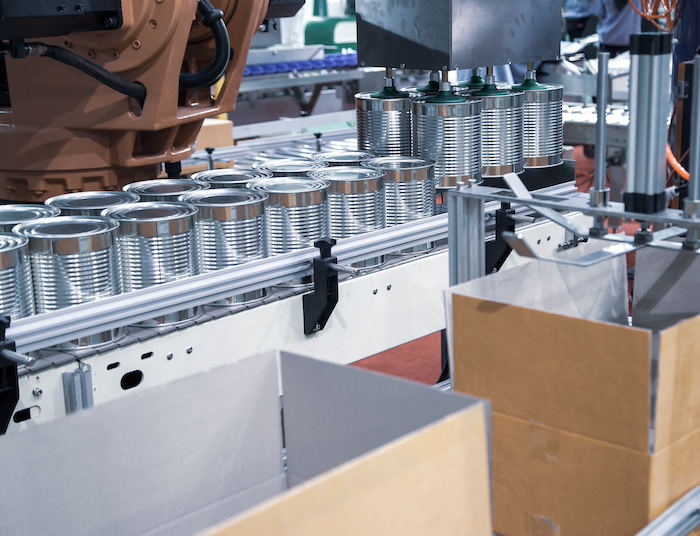
Image: Itsanan/ stock.adobe.com
Drawing on data
Real-time data is going to play a huge role in ensuring can makers can stay efficient, compliant, and consumer-focused in 2025. Industrial Physics’ 2024 research data revealed data analytics and data acquisition to be two of the technologies that offer the most opportunity to packaging professionals.
The use of data analytics is already providing significant advantages to companies in packaging production, allowing them to spot issues in the production line and allocate resources more efficiently to reduce waste.
Machine-learning algorithms will allow for more accurate predictions of material requirements based on demand trends, helping to reduce overproduction and storage costs. What’s more, with RFID tags and IoT-enabled tracking, companies can monitor the exact journey of each package, understanding material use, reuse, and recycling rates. This data helps improve resource efficiency and optimise supply chains.
Moving forward
The can making industry is already benefiting from developments made over the previous decade – this includes developments that have led to advantages such as lower material use required per product and superior recyclability in comparison to other materials such as PET and glass bottles.
However, this does not mean that the opportunities for innovation and improvement in can making are limited. Technological developments for both the production and testing process are offering substantial advantages for packaging professionals looking to forecast more effectively, reduce wasted materials, and alleviate the reliance on human intervention within the packaging production line.
With so many methods to consider, it can be difficult to evaluate the best fit for a specific can making operation. Testing partners are in a prime position to advise and guide can makers on how to make the best decisions based on their current operations and company objectives. Industry bodies and events are also a great place to look for information on what is being trialled in the sector and what a comparable approach might deliver in results.
- Steve Davis is global director of product management at Industrial Physics.
Topics
Artificial Intelligence packaging materials regulatory compliance in packaging Technological advancements
PeopleOrganisationsRegions