Creating advanced alloys

Truck loading alumnium onboard a ship at quay in Karmøy
Recent developments in the creation of metal alloys for packaging are delivering high-strength, high-entropy (aiding durability) and multi-component alloys (with multiple properties – such as low weight and malleability).
A representative metal packaging major from Ball Corporation told CanTech International: “We consistently partner with our customers to innovate to meet their consumers’ needs and help solve packaging problems.
“As sustainability is a key highlight of our aluminium packaging, we work with suppliers to ensure the highest quality and recycled content is used in our metal.”
One example is Ball’s ReAl alloy, which can reduce can weight by 15% compared to a standard aluminium aerosol can, Ball claims.
Indeed, innovative metal alloys can help reduced costs, boost safety and cut carbon emissions more effectively than traditional materials, said Andy Doran, director of the packaging group at European Aluminium (EA). He said innovation in aluminium packaging alloys includes development of new alloy formulations, standardisation of alloy uses in multiple products or use in new gauges (thickness).
All these can help deliver improved productor system-wide improvements that make aluminium packaging lighter, easier to open or more recyclable, he told CanTech: “There really is no single route, all paths lead to success,” he said, citing a life cycle assessment report, ‘A Permanent Solution for Circularity in Europe,’ released in December 2025 by industry association Metal Packaging Europe (MPE). It highlighted continued improvements metal packaging technology enabling aluminium beverage and food cans to reduce their carbon footprints by up to 31% since 2022.
For its part, the EA is focusing on a circular can end project, where four leading flat-rolled aluminium manufacturers – Constellium, Elval, Novelis and Speira – are taking part in an alloy development project to maximise the recycled content levels of the beverage can.
Launched April 2024, the project is supported by MPE, whose deputy CEO Sarah Cuvellier predicted: “It will help to ensure the closed product loop.” Andy Doran explained the three-year initiative will assess two technical routes for increasing recycled content in aluminium beverage cans, while maintaining performance and recyclability: “Work began in mid-2025 with final outcomes expected in mid-2027,” he said.
The first route uses a single-alloy solution using AA3104 made from aluminium, manganese and magnesium for the can body and can end, which allows the cans to be recycled infinitely with significantly reduced need for primary aluminium input. The second route focuses on using an alternative alloy for the can end with a high proportion of aluminium that hence absorbs substantially higher volumes of used beverage can scrap and other alloy-compatible scrap streams.
The project, now in data consolidation and standardisation phase, began with a period of mapping and assessing solutions common to both approaches. The second phase was dedicated to defining selection criteria and key performance indicators to support the final alloy choice.
Such work reflects innovations elsewhere. For example, in one project launched in August 2025, Atlanta, Georgia-based aluminium rolling and recycling company Novelis, and Dayton, Ohio-based manufacturing equipment expert DRT Holdings (DRT) are aiming to produce beverage can ends using a single aluminium-based alloy, allowing up to 90% recycled content and more than 50% reduction in carbon footprint versus current alloy mixes.
Typically, the body of an aluminium can is made from the 3004 aluminium/manganese/ magnesium alloy, while ends are made of the higher strength 5182 aluminium/magnesium/ manganese base alloy with good corrosion resistance, said Novelis. It is aiming to work with DRT to allow the can end to be made from the same alloy as the can body. The goal is to produce an alloy end to be adopted across the global aluminium beverage can market.

Innovative high-strength steel grades designed for packaging allow manufacturers to reduce material thickness. Image: European Metals.
Metal can industry experts agree that advanced aluminium alloys and related manufacturing processes can significantly reduce metal content. An EU metal packaging expert who requested anonymity cited lightweighting figures of up to 20% or more in cans through innovative alloy usage.
He added that advanced metal alloys and manufacturing processes can significantly reduce metal content (thinner products with equal or improved strength reduces material use per unit produced, lowering raw material costs).
“In addition, lower carbon footprint, using higher recycled content (with alloys up to 99% recycled material) reduces the carbon emissions of production, as recycled material requires much less energy than primary produced material,” the EU expert told CanTech, adding: “Reducing weight also reduces transport emissions and fuel use in supply chains.”
In the UK, Bernard Slack, technical and regulatory affairs manager at the Metal Packaging Manufacturers Association (MPMA), commenting on Novelis and DRT’s agreement to create uni-alloys, and if there could be one alloy for beverage can bodies and the end plus tab, said, “the can-to-can recycled content will be possible in theory at or close to 100%. In practice, this will be limited by the availability of recycled cans,” he stressed.
“In addition, with the adoption of [codes] 202 [52mm] and 200 [50mm] diameter ends, which lend themselves to higher pressure resistance, the uni-alloy can has now become technically feasible.”
But he explained that while both can alloys used in the Novelis/DRT project – AA3104 for the body and AA5182 for the end and tab – use manganese and magnesium as the two main alloying elements – there is slightly more magnesium in the AA5182.
James Watson, director general of European Metals (formerly Eurometaux), while applauding the Novelis/DDT initiative, called for caution, arguing: “Recycled content should be used mainly as a stimulus for those materials where secondary raw materials markets are not fully functioning yet, to address market failures.
“What is essential is ensuring that metals-containing products are collected, sorted and recycled effectively using the best available techniques, contributing to creating the right conditions for increased secondary metals use,” Watson added.
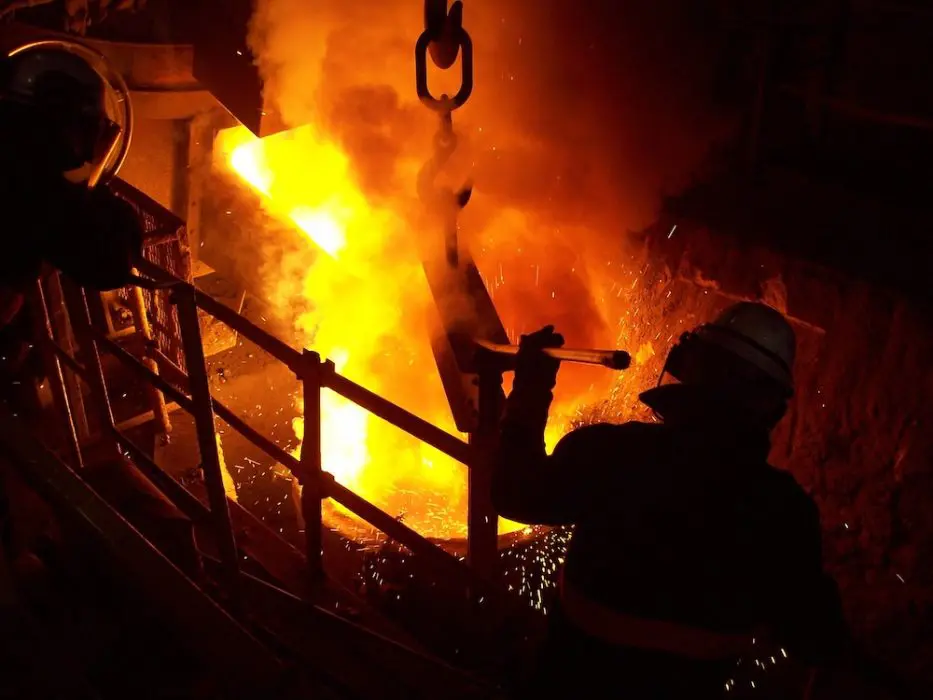
The combination of molten metals to form alloys is becoming increasingly varied and innovative. Image: Goodwin Steel Casting.
In certain applications and cases, he also said there was a risk of rerouting certain materials from some applications with no recycled content targets to others which do have prescribed targets.
Indeed, with insufficient EU sources of some materials, the can industry is forced to import secondary materials from outside the EU coming with a significant carbon load, “going against the EU objectives to lower products’ environmental and carbon footprint.”
Watson therefore welcomed the European Commission’s announcement, on 18 November 2025, of safeguard measures on certain ferroalloys – applying to ferro-manganese, ferro-silicon, ferro-silico-manganese and ferrosilico- magnesium – as “crucial to protect the EU ferroalloy industry from unfair impacts of global overcapacity.” These would apply to imports from all non-EU sources, including Norway and Iceland, which are part of the EU-linked European Economic Area (EEA).
The EU metals expert added that while the measures target broader metallurgical industries rather than packaging directly, they “bolster Europe’s industrial autonomy and alloy innovation system,” enabling advances in packaging materials.
The Commission decision followed a safeguard investigation launched December 2024 that found rising imports were causing serious injury to EU ferroalloy producers. The ferroalloy imports concerned increased 17% between 2019 and 2024, causing EU producers’ market share to fall from 38% to 24%, the Commission noted.
Watson said a resulting country-specific tariff-rate quota (TRQ) approach, with duties for volumes entering the EU beyond quota thresholds for each country, with the aim to limit duty-free imports to 75% of 2022–2024 levels, “would ensure a stable and diversified supply of critical materials for Europe’s steel and defence sectors in times of geopolitical uncertainty.”
However, he had concerns about including Norway and Iceland in the duties, saying this might “undermine the interconnected EU supply chain with EEA [European Economic Area] partners.” He also argued that silicon metal and calcium silicon should be included in the measures, “as EU producers of these materials can still be affected by negative market share trends,” although this option is not currently being considered by the Commission.
The measures will also include Brexited Britain and MPMA’s Slack argued that the measures, which will run until 17 November 2028, would help fuel uncertainty for the UK metal packaging industry, that “risk disrupting business planning and may lead to cost increases for UK consumers.”
The ferroalloy proposal aims to protect the EU steel sector, but the resulting increase in EU steel prices and effect on businesses, particularly SMEs that rely on small shipment sizes and niche specifications unavailable in the EU, should be considered too, said Slack.
In addition, its ‘melt and pour’ requirement [meaning that for steel, aluminium, and related products, the country where the raw metal is first produced in a liquid state and poured into its initial solid shape, such as slabs or ingots, must be documented], will also “greatly increase the administrative burden on steel users.”
Topics
aerosol cans aluminium packaging metal alloys packaging materials raw materials
PeopleAndy Doran Bernard Slack James Watson Liz Newmark Sarah Cuvellier
Organisationsball corporation Constellium DRT Holdings Elval Eurométaux European Aluminium European Metals Hydro metal packaging europe Metal Packaging Manufacturers Assocation novelis Speira
Regions