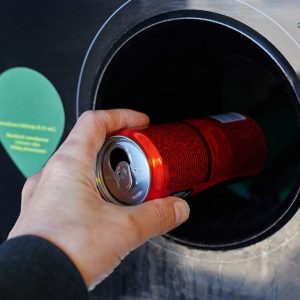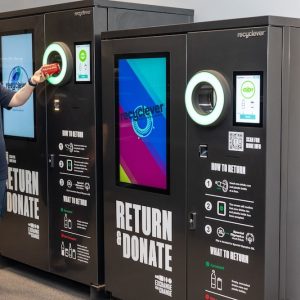
Circularity in action

Credit: Tomra
Cape Decision’s Dominique Huret reports on the DRS success stories that are powering post-PPWR progress.
The Deposit Return System is a well-known success story in several countries. Lithuania is one of the most obvious in recent years: since 2016, the country’s performance for the collection of aluminium cans and PET bottles has transformed it from underperforming status to one of Europe’s top performers – this within just two years. Dominique Huret from Cape Decision reports on the progress and challenges of a handful of countries.
The first week of June 2025 saw the commencement of EU Green Week. In Brussels, policymakers, national authorities, industry players and civil society groups gathered to examine how Deposit Return Systems support the goals of the Packaging and Packaging Waste Regulation (PPWR), while tackling wider issues of material efficiency.
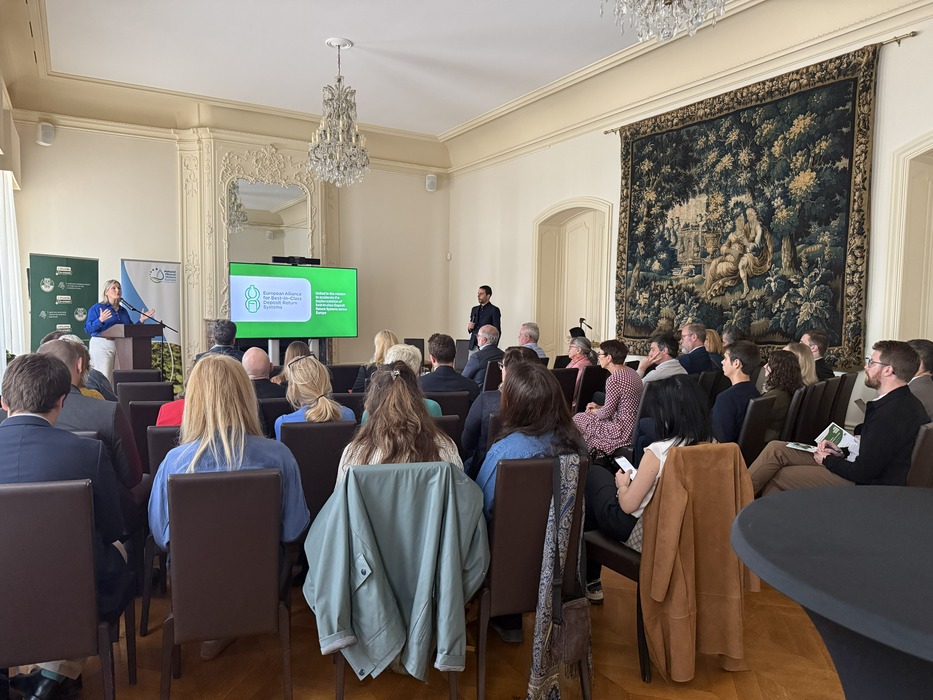
Credit: Dominique Huret
 Clarissa Morawski, CEO of Reloop, clearly set the scene: “Litter is a universal problem. Beyond being unsightly, it poses serious environmental, economic and health risks. Among the items that pollute public spaces, beverage containers consistently rank as one of the most prominent forms of litter.
“Despite this reality, critics of deposit return systems often argue that beverage containers make up too small a portion of the litter stream to justify a separate collection system. While it’s true that by count, smaller items like cigarette butts are often the most commonly found, not all litter carries the same weight in terms of impact on visual amenity or life cycle impacts.
“The ‘Keep Britain Tidy’ report found that drinks-related litter is viewed as the most problematic type of litter, with 92% of people citing it as an issue in their local area. This underscores the fact that beverage containers are not just common, but also highly visible and have a disproportionately high impact on how clean (or dirty) a place feels.
“Moreover, unlike many other forms of litter like cigarette butts and chewing gum, beverage containers are highly recyclable. Allowing them to persist in the environment is not only wasteful, but also entirely avoidable. Beverage containers consistently make up a significant share of litter, but where deposit return systems are in place, their presence in the litter stream is dramatically lower,” she added.
In European countries with a deposit return scheme, Reloop found that plastic bottles accounted for an average of just 0.5% of total litter by count in 2023, compared to 3.2% in countries without a scheme – an 86% lower share.
Leading by example
Host of the event, Jurga Kasputienė, ambassador of Lithuania to the EU, commented: “Lithuania’s deposit return system has been a success story since 2016. Each member state has its own specificities, but sharing practical experience helps everyone develop more effective systems.”
In the Republic of Ireland, DRS was introduced in February 2024. Despite its recent launch, early signs indicate a strong impact. A national litter survey conducted in June 2024 found a 30% reduction in drinks can litter and a 20% drop in plastic bottle litter. Additionally, Coastwatch Ireland’s annual marine litter survey recorded the lowest bottle and can counts in 25 years, with bottles per kilometre declining from a peak of 100 in 2010 to below eight in 2024. The deposit value varies from €0.15 (US$0.16) for smaller containers to €0.25 ($0.27) for larger ones.
England, Northern Ireland and Scotland are aligning for a UK-wide DRS launch in October 2027, covering aluminium cans, PET bottles and steel (excluding glass). The government regulations were laid in January 2025, with deposit management organisations (DMOs) appointed by May 2025. Implementation phases are ongoing through to spring 2026, including setting up infrastructure, labelling and reverse vending machines.
The Australian Capital Territory (ACT) introduced its DRS in June 2018, offering an AU$0.10 (€0.06, US$0.06) refund for eligible beverage containers ranging in size from 150ml to 3L. The programme covers plastic (PET and HDPE), metal (aluminium and steel), glass and liquid paperboard. Data from the Keep Australia Beautiful National Litter Index shows a substantial decline in beverage container litter following the scheme’s introduction. In the year prior to the DRS, 1.8 beverage containers were recorded per 1,000m². By 2018 to 2019, this reduced to 61%, demonstrating the immediate effectiveness of the programme in reducing litter. By 2019 to 2020, the figure had decreased even further to 0.6 containers, representing a total reduction of 67% compared to pre-DRS levels.
In France, a nationwide rollout is under discussion for a DRS for PET bottles and aluminium cans in the coming months, in order for the country to reach EU recycling targets. As of June 2025, the hexagon is lagging behind, with only about 53% of bottles and cans collected – far from the EU’s 90% by 2029 goal. Recycling rates are stuck at 28 to 30% overall versus the EU target at 55%, and 37% for aluminium versus the EU target of 60%. There is an obvious government push, with Emmanuel Macron urging to “keep up the fight” for deposits at the UN Ocean Conference in Nice.
Eco-organisation, Citeo, strongly backs the scheme. However, Aloys de Parscau, global marketing and sustainability director for beverages, Danone Waters, urged: “But we must face reality: the DRS continues to present many challenges. Where should this equipment be installed? Large retailers are often reluctant. Who should finance it? In many cases, it’s partly local authorities and manufacturers and ultimately, consumers who will pay for them. Let’s not forget the logistics involved in collecting the packaging and transporting it to recycling centres. Everything needs to be carefully planned to ensure long-term viability. With enough will, a two-year period is needed to set it up. However, we at Danone Waters are firmly committed to the collection of our packaging – that’s absolutely non-negotiable for us.”
Recommended ways
Dr Wolfgang Trunk, the European Commission’s directorate-general for the environment, highlighted: “DRS are crucial in reducing packaging waste generation, which is the objective of the PPWR. Member States may be exempted from the obligation to set up a DRS if in 2026 they achieve an 80% separate collection rate by weight of single-use plastic and metal beverage bottles, but the burden of proof is significant. The Commission is confident that the majority of member states will implement a DRS to meet PPWR waste reduction targets,” he said.
With more than 20 years in the beverage sector and strong expertise in DRS and EPR, Raymond Gianotten, consultant at OLHC, shared: “No two DRSs are alike but successful models rely all on nine principles, among others: industry control, national coverage, clear legislative frameworks and material access. Finally, 24 months are needed for implementation of a DRS.” Lastly, Raymond warned against government-run systems and recommended that in the case of de-centralised systems, those remain not-for-profit and are coordinated by an umbrella organisation.
Natural Mineral Water Europe secretary general, Patricia Fosselard, concluded by calling for collaboration and knowledge sharing. “DRS are widely acknowledged as one of the most effective tools to boost resource efficiency and achieve high-quality recycling. The question now is how to make them work in every national context. There is no one-size-fits-all solution, but there is a growing pool of best practices to draw on. So far, Europe has only seen success stories.”
TopicsPeople
Clarissa Morawski Jurga Kasputienė Patricia Fosselard Raymond Gianotten
OrganisationsCiteo Coastwatch Ireland Danone Waters European Commission Natural Mineral Water Europe OLHC Reloop
Regions