Eyeing regional dominance

Fishing boats in Anse Royale, Mahe, Seychelles. Image: NorbertNagel
The strong industrial tuna sector in Seychelles, the 115-island Indian Ocean archipelago covering 450km² of land area and an exclusive economic zone of 1.3 million km², has the potential to become a regional canning powerhouse.
In 2024, Seychelles exported 43.3 million kilograms of prepared or preserved tuna, skipjack and bonito, valued at US$273.9 million, according to the World Bank’s World Integrated Trade Solution (WITS).
The Seychelles-based Indian Ocean Tuna Ltd (IOT) – 60 per cent owned by the world’s largest producer of canned tuna, the Bangkok, Thailand based Thai Union Group, and 40 per cent by the Seychelles government – operates the largest cannery in the country within its capital of Victoria.
“Our Seychelles factory is an important part of our operations network. It is our largest tuna processing facility outside of Thailand and located in a strategic location, which enables us to source the fish from the Indian Ocean with cheaper transportation cost and higher quality fish fresh of the sea,” Thai Union told CanTech International.
IOT employs about 2,000 people directly in the 130,000-population country, being one-third Seychellois (the country has a low 2.5 per cent unemployment rate, making local recruitment tough). It also contributes roughly 95 per cent of the country’s national manufactured goods exports, Professor Jérôme Harlay, director of the Blue Economy Research Institute at the University of Seychelles, told CanTech.
“In 2024, Seychelles’ tuna fisheries purse seine fleet reported an estimated catch of 117,709 metric tonnes and IOT produced over 100 million cans, with up to 1.5 million cans produced daily,” Harlay added, explaining: “The catch is frozen on board, unloaded and stored on land for processing at IOT.” The main tuna species exploited by the industrial fisheries are yellowfin, skipjack and bigeye, he said.
While climate change is impacting fisheries, he highlighted that vessels targeting Indian Ocean fisheries use advanced technology such as inboard scanning sonars, remote sensing and floating aggregating devices (FADs), manufactured objects (including hanging nets) used to attract fish. They have been developed to include monitoring tech, recording FAD positions, and delivering water temperature and school aggregation data, which are transmitted to fishing vessels.
“Cans are produced locally from imported tinplated steel, which is cut and shaped in a factory adjacent to IOT,” said Harlay, clarifying that the country does not have a steel industry to support the sector and it lacks land to store raw or semi-processed materials.
According to WITS, in 2024, Seychelles imported 7.5 million kilograms of small cans made from iron or steel (tuna cans’ standard material) valued at $23.6 million.
While an expansion of this industry would boost the Seychellois economy, “land allocation is the most constraining factor to be considered for foreign and local investors,” noted Harlay, explaining that by government’s decision, the tuna industry is concentrated in a ten-hectare area adjacent to the country’s main fishing harbour in Victoria, on Mahé island, to minimise impacts of transportation. That said, he added that the government is considering the prospects of the nearby reclaimed island of Île du Port as a location for hosting future fish processing and cold storage facilities.
Harlay added that another challenge faced by the country’s canned fish sector is the risk of piracy. According to the Global Organized Crime Index 2025, due to its expansive geography and position along a major trafficking corridor linking Afghanistan and Iran to southern and eastern Africa and Europe, Seychelles faces ongoing challenges in border monitoring and security to fight issues such piracy and illegal, unreported and unregulated fishing.
“The state has sought international support to enhance surveillance infrastructure and operational capacity for monitoring territorial waters. Border control personnel at official entry points are generally equipped to intercept illicit substances, but there are concerns about corruption in these ranks, which could affect the effectiveness of enforcement measures,” said the Index report.
Harlay said: “Seychelles has put in place a broad, multi-layered network of maritime security partners to fight against piracy and illegal activities.”
As for the reliability of legal maritime services carrying canned tuna, these are vulnerable to geopolitical pressures restricting shipping availability and routes, such as Covid-19, Russia’s invasion of Ukraine, US-tariff fluctuations and, more recently the Israel/US attacks on Iran, he added.
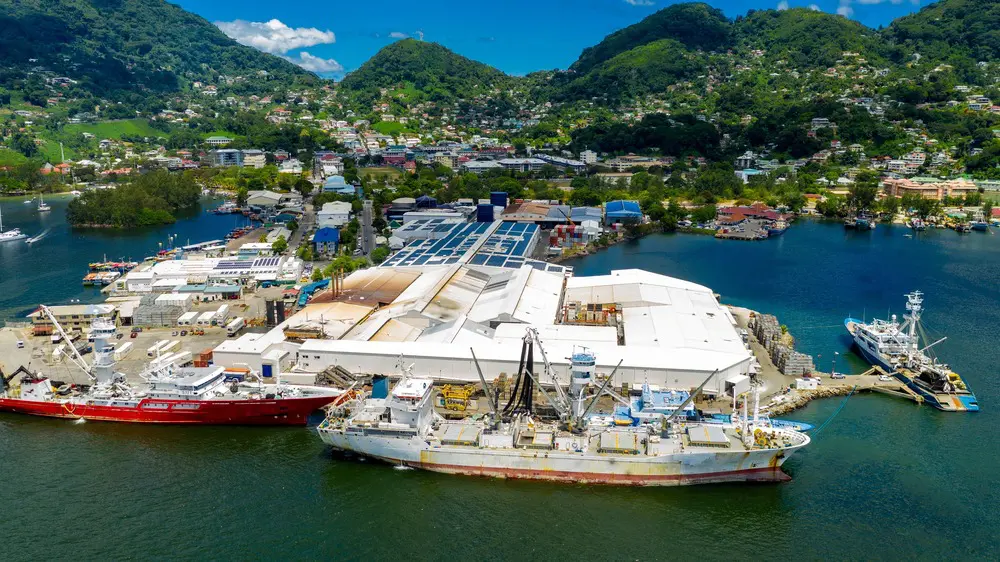
Indian Ocean Tuna’s factory in the Seychelles is the largest cannery in the country. Image: Thai Union Group
In its Seychelles National Development Strategy 2024-2028, the ministry of finance, national planning and trade released plans to develop a ‘Fish Processing Zone’ and other fisheries-related infrastructures, besides sustainable alternatives to stock management. The ministry also identified other issues to be faced, including the uncertainty caused by regional quotes imposed by the Victoria-based intergovernmental organisation, the Indian Ocean Tuna Commission (IOTC), high energy costs, gradual decline of skills at the artisanal level, outdated air and seaports, and a failure to boost added value production.
Its medium-term solution is more sustainable value-added exports (which could include canned products) and aquaculture development targeting catering to high-end exports.
Meanwhile, the Seychelles’ National Tuna Fishery Management Plan was finalised by the Seychelles Fishing Authority in May 2024 to promote the effective and holistic development, management, conservation and equitable use of tuna resources.
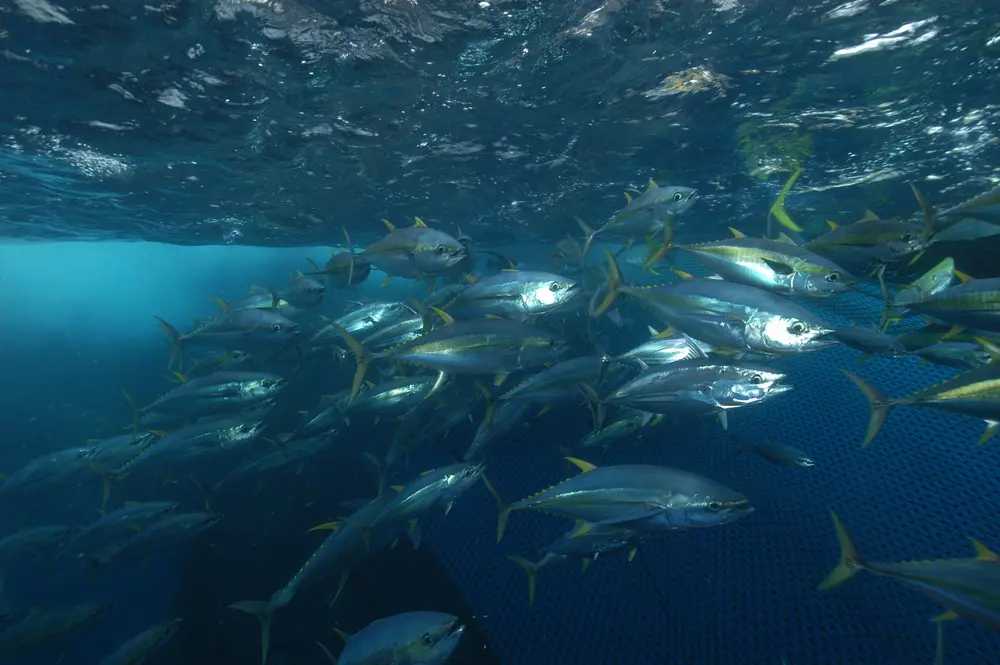
A school of albacore tuna gathered by a seine net, off the Seychelles. Image: Marc Taquet
Other strategies highlighted in the Seychelles National Development Strategy 2024-2028 included diversifying products; building capacity in fisheries and the maritime sector; and exploring and developing the extractive industry – oil, gas and other minerals – in Seychelles’ Exclusive Economic Zone (EEZ), which could potentially help develop a packaging and manufacturing hub. The strategy is also exploring utilising Seychelles’ extended continental shelf (potentially claiming rights over the standard EEZ within 200 nautical miles of a nation’s coast).
Harley added that the government is requiring Seychellois industry to plan investments into renewable energy sources, where feasible. For example, solar energy panels have been installed onto the Central Common Cold Store (CCCS), the leading cold storage rental facility in Seychelles, where 12,600 tonnes of frozen fish stocks are kept prior to processing. IOT holds a six per cent share of CCCS ownership.
IOT’s plans, under Thai Union’s sustainability strategy SeaChange 2030, include reaching net zero emissions by 2050 and to make it a closed-loop factory by implementing zero water discharge, zero waste to landfill and zero food loss.
Patrice Guillotreau, senior researcher of the French National Research Institute for Sustainable Development and co-author of the paper ‘How fisheries can support a small island economy in pandemic times: the Seychelles case’ told CanTech that since the Covid-19 pandemic, the government has worked with the private sector to build “a big project for storage facilities, in particular warehouses,” and increase the domestic semi-industrial fishing fleet from around 30 to 60 vessels in five years.
While industrial long-liners – mainly from Asia (Taiwan in particular, but also Japan and other countries) – fish the whole Indian Ocean and can stay at sea for many months, coastal long liners offer better prospects for local Seychelles EEZ income. To support this development, the government and companies have created ice machines and new facilities, Guillotreau said, adding: “Most of the crew are Sri Lankan because it is very difficult to find a Seychelles’ crew. They prefer to work in other sectors.”
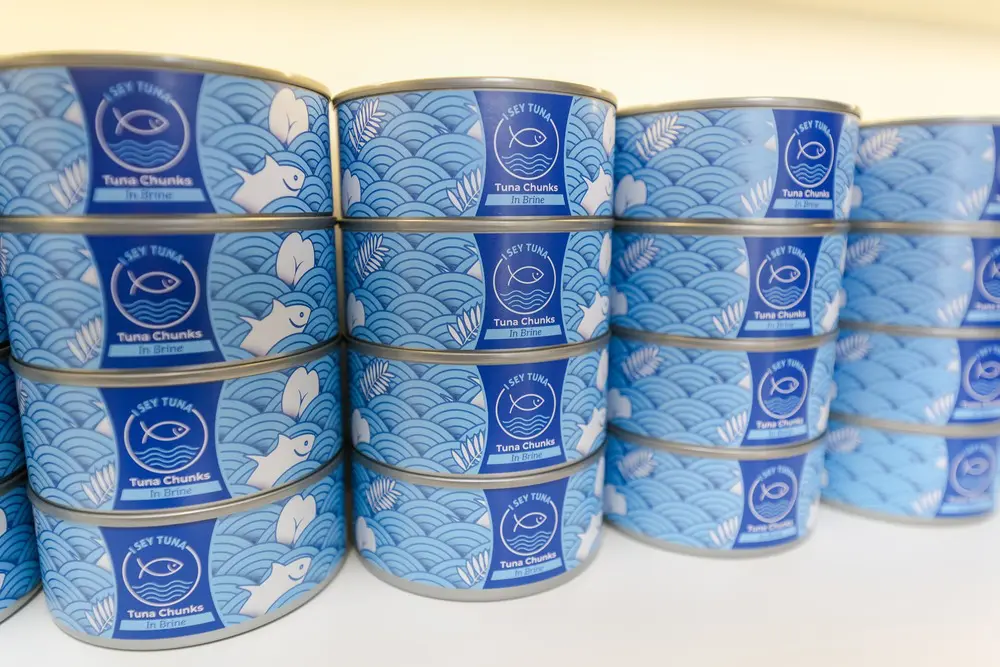
Canned tuna sold by the Indian Ocean Tuna in Seychelles. Image: Thai Union Group
In fact, Guillotreau also explained that due to ship reflagging, it is hard to know where investments are coming from. For instance, he said: “13 per cent of the vessels belonging to Seychelles are Spanish owned and become an export to Seychelles when they are landed. If the vessel which is owned by the same company is Seychelles flagged, then it is not an export, it is just a local landing.”
Furthermore, Guillotreau believes the sector can be optimistic about the yellowfin stock, which is no longer overfished, according to a May 2026 communication by the Pennsylvania, United States-based International Seafood Sustainability Foundation. Still, he advised caution given that many countries underreport or lack the capacity to report fishing data, especially in the Indian Ocean, where perhaps half of these major species are caught by small scale fisheries.
Indeed, he noted that companies like OIT feel genuinely concerned about the long-term sustainability of tuna, promoting resolutions that could be adopted by regional fisheries management organisations such as the IOTC.
Guillotreau also called for industrial fisheries to reduce the use of FADs, since many are abandoned at sea: “The most productive fishing grounds in the Indian Ocean and in the world are around Seychelles,” noted Guillotreau, also stressing the development and the human and physical capital there: “It remains attractive for many aspects because the institutions are working well.”
Moreover, he praised Seychelles’ work with the European Union (EU) to expand facilities, including for fish landing and other port-related activities. Indeed, Harlay also stressed the benefits of the European Union-Seychelles Sustainable Fisheries Partnership Agreement (SFPA) – a 2026- 2030 version is ready for signature – “offering access for EU tuna vessels in exchange for roughly EU€5.75 million annually, with a focus on sustainable management.”
“Other agreements have been signed with Mauritius, Taiwan and private companies but their financial return is less compared to the Seychelles- EU SFPA,” he highlighted.
A European Commission spokesperson told CanTech that the deal “will allow the local canned fish producers to continue benefiting from the supply of raw material from EU vessels operating in Seychelles’ waters.”
Furthermore, Seychelles is still implementing its commitments under a regional Interim Economic Partnership Agreement between the EU and Seychelles, Comoros, Madagascar, Mauritius and Zimbabwe, with negotiations ongoing to deepen the deal.
Topics
and global supply chains climate change exports Fisheries sustainability and resource management Infrastructure and industrial development in island economies Maritime security and piracy risks trade Tuna processing
PeopleAndreia Nogueira Patrice Guillotreau Professor Jérôme Harlay
OrganisationsCentral Common Cold Store French National Research Institute for Sustainable Development Indian Ocean Tuna Ltd International Seafood Sustainability Foundation Seychelles Fishing Authority Thai Union Group University of Seychelles World Bank’s World Integrated Trade Solution
Regions