Disruption continues from Iran War
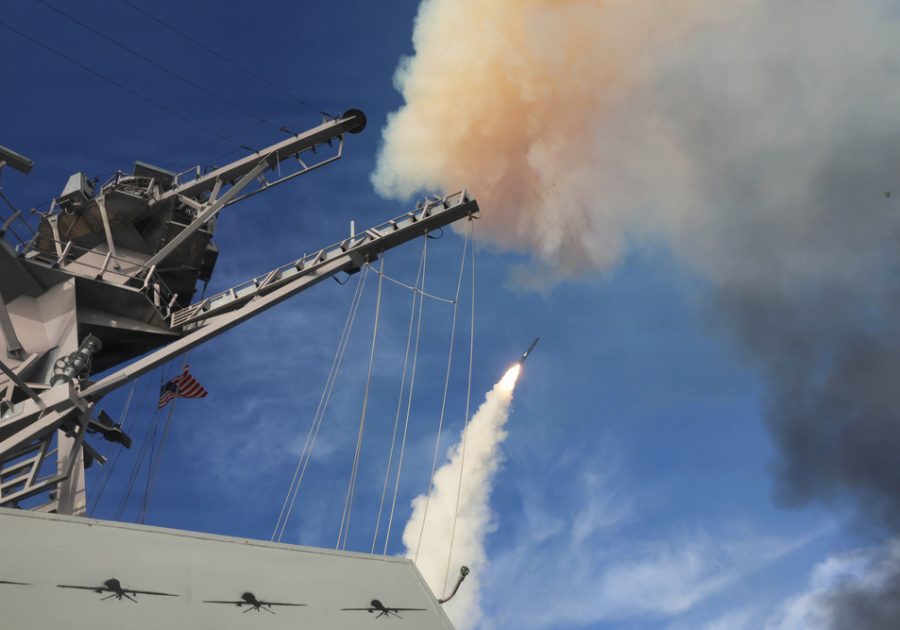
The USS Thomas Hudner fires a Tomahawk land attack missile during Operation Epic Fury. Image: USA Navy
The Iran War is causing significant damage to the European metals and metal packaging industry, European Union (EU) experts have told CanTech International, with key Gulf aluminium suppliers being damaged. “The conflict is creating uncertainty across global metals and energy markets, with aluminium being particularly exposed,” said Dr James Watson, director general of Brussels-based industry association European Metals.
“Metals production is highly energy intensive and depends on stable international trade routes. The Gulf region produces around 6.8 million tonnes of primary aluminium annually and remains an important supplier to Europe, accounting for approximately 14 per cent of total EU imports of aluminium products,” said Dr Watson.
Indeed, the conflict has also already inflated aluminium prices and increased volatility across commodity markets – since 28 February, when Israel and the US attacked Iran, London Metal Exchange (LME) aluminium prices have increased by 15%, while European ‘premiums’ surcharges (designed to attract primary aluminium to Europe that also covers logistics costs, duties and border charges) have risen by about 60%.
Dr Watson said war-promoted disruption affected not only aluminium producers but also upstream suppliers including mining companies and alumina refiners, emphasising that the metal packaging industry’s main concerns were “increased raw material costs, higher energy prices and greater volatility throughout the supply chain.”
With the Iran War showing no sign of stopping, he told CanTech if disruptions persisted, the risk of additional supply chain pressures would increase: “The Strait of Hormuz is a critical route for global energy and commodity flows and continued restrictions could lead to higher transportation costs, tighter supply conditions and increased volatility,” he said.
The European metal can industry’s most immediate concern is the impact on energy markets, with higher gas and electricity prices further increasing production costs for energy intensive sectors including metals manufacturing and processing, he argued. European gas prices rose sharply in early March 2026, from around EU€30-35 per MWh to €60-70/MWh, before falling to around €45-51/MWh by mid-May, said the European Aluminium (EA) association.
“The longer uncertainty persists, the greater the pressure on industrial competitiveness and investment decisions,” Dr Watson said, adding: “European non-ferrous metals producers are already operating with electricity costs that remain substantially higher than international competitors.”
While higher prices can benefit some primary producers, “downstream manufacturers often face squeezed margins as they absorb higher raw material costs while operating in markets with weak demand, particularly in sectors such as the European automotive industry,” said the European Metals DG.
He added that impacts vary significantly across metals, companies and positions within the value chain: “Market conditions remain highly dynamic and future developments will depend on both geopolitical developments and on the evolution of European energy markets.”
Andy Doran, director packaging at EA, echoed Watson’s concerns, telling CanTech that the war and blockade of the Strait of Hormuz were adding pressure to Europe’s entire value chain, primarily through rising input costs and increased uncertainty around feedstock availability. “If the blockade continues, the impact could move beyond short-term price volatility and create broader supply pressures across the aluminium market,” he said.
“Reduced availability of primary aluminium from the Persian Gulf could increase demand for aluminium scrap, potentially pushing scrap prices higher, intensifying competition for European scrap, and increasing the risk of scrap being exported to higher-paying markets outside the EU.
“This would be relevant for all aluminium end uses that rely on recycled material, including can-sheet production,” said Doran.
He explained that the aluminium industry’s main concern is “the combined effect of rising metal prices, increased European premiums, tighter scrap availability, higher energy costs and more unpredictable trade flows.”
He argued: “While widespread shortages are not yet evident, the current situation is adding costs, complicating procurement and reducing predictability for aluminium producers, downstream suppliers and their customers across the value chain.”
In addition, pressure on feedstock supplies for downstream manufacturing is increasing. Three major Gulf region aluminium smelters, aluminium conglomerate Emirates Global Aluminium (EGA), Aluminium Bahrain (Alba) and Qatalum (a joint venture between QatarEnergy and Norsk Hydro) have announced production cuts or shutdowns.
An EA note sent to CanTech said: “The latest assessments foresee a global deficit in the primary aluminium market in 2026 of around 1.4 to two million tonnes, with uncertainty depending on the duration of the conflict, including any closure of the Strait of Hormuz.”
Downstream manufacturing industries relying on feedstock will feel the impact first, notably packaging, automotive, construction and electrical infrastructure.
The EA also notes the impact on European and United States’ scrap supply, with around 6% of EU scrap imports coming from the Persian Gulf: “Reduced availability of primary aluminium, which accounts for 19% of EU imports and 21% of US ingot imports, is expected to trigger global substitution effects,” the note said.
“This will intensify global demand for scrap, reinforce competition for available volumes and strengthen the attractiveness of key markets such as the US (particularly for higher-quality scrap). At the same time, US exports of mixed scrap to Asia are likely to decline, further tightening global supply.”
The UK’s Metal Packaging Manufacturers Association (MPMA) would not comment on the conflict’s possible impact, but the damage has already been done.
Indeed, the EA note said: “Even in a best-case scenario – ie, a rapid resolution of the conflict – a full normalisation of the aluminium market is unlikely before Q4 2026 to mid-2027.”
Gulf output harmed
A key problem is that the closure of the Strait of Hormuz has been worsened by Iranian asymmetrical attacks on two smelters in the Gulf – in Bahrain and the United Arab Emirates (UAE), and related attacks on smelter energy supplies, including in Qatar. These have reduced annual aluminium production from these three countries by up to three million tonnes, helping drive up global prices.
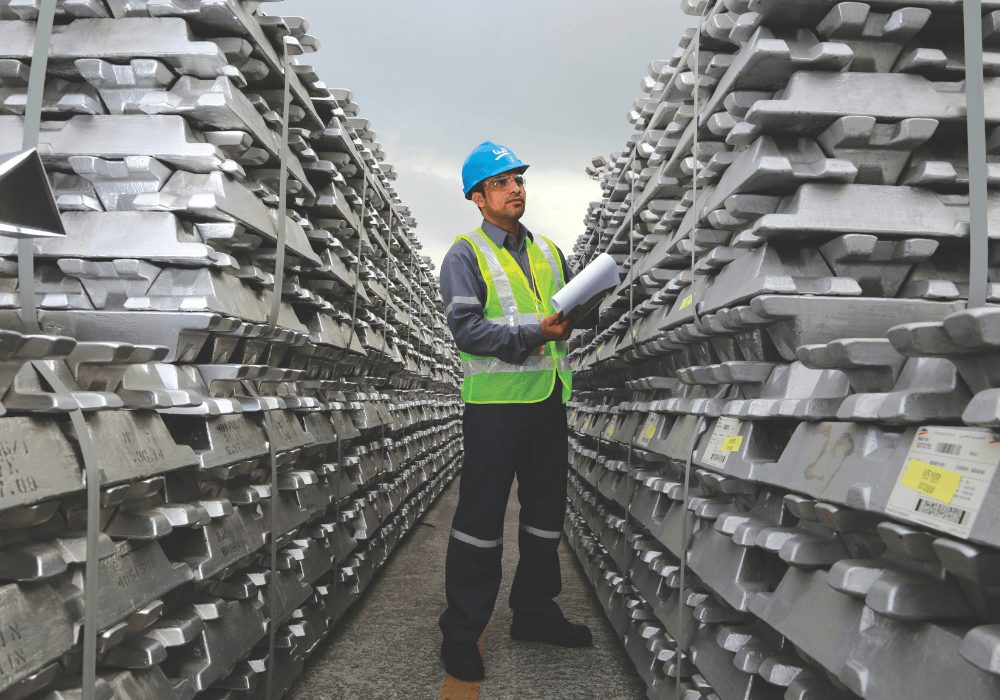
Aluminium products from Bahrain’s Alba are a key part of the global aluminium supply chain – disrupted by the Iran war. Image: Albasmelter- creativecommons.org/licenses/by-sa/4.0/deed.en
“The Gulf is a huge supplier of aluminium, at around 6.2 million tonnes-a-year, which is about 9% of global supply, but pretty much nothing is coming out since the war started and the Strait closed,” said Jethro Wookey, senior aluminium expert at UK-based Argus Non-Ferrous Markets. He added that about two to three million tonnes of production has been taken offline, some “confirmed and admitted to, others not so much.”
In early March, Qatar’s Qatalum initiated a controlled shutdown after Iranian attacks on natural gas facilities in the emirate, citing a lack of power supply. In late March, two of the world’s largest smelters, producing over 3.2 million tonnes annually were hit by Iranian missiles and drones. The UAE’s Emirates Global Aluminium’s (EGA) Al Taweelah plant suffered damage to the smelter, power plant, alumina refinery and recycling plant. Aluminium Bahrain (Alba) sustained damage to its smelter facilities, also from Iranian missiles and drones in late March, but earlier in the month had shut down 19% of its production capacity due to the closure of the Strait of Hormuz, which had impacted imports of key raw materials alumina and bauxite.
Indeed, smelters in the Gulf region have been struggling to truck enough raw materials from the Red Sea and Oman to keep operations going: “The solutions are not scalable, you need thousands of bags of alumina a day,” said Paul Adkins, founder and managing director of Hong Kong-based aluminium consultancy AZ Global.
An estimated to to three million tonnes of aluminium have been taken offline due to the crisis, said Adkins. “The three smelters are in a diabolical situation. There will be extensive delays and deferments until they get metal production back,” he said.
EGA has announced it will need up to 12 months to rebuild Al Taweelah. “I’m very pessimistic EGA will meet that deadline… They have to completely rebuild the smelters, there is a lot of equipment to buy, and some of the super-structure needed has long lead times, even before you have a war,” said Adkins. Qatalum is expected to be able to re-start relatively quickly, if energy is available, while Alba may take longer due to missile damage, he added.
Gulf producers had exported 85% of their output. Around 28% of Japan’s aluminium was sourced from the region, 21% of US aluminium imports, and 19% of Europe’s primary aluminium and 5% of aluminium flat-rolled products, according to Aluminium International Today journal figures.
Meanwhile, the Ma’aden aluminium smelter in Saudi Arabia (north of Qatar on the Gulf coast) and the Sohar smelter in Oman are still operational, (in this case being helpfully located south of the Strait of Hormuz. Production is occurring at the Qatalum, Alba and EGA’s Jebel Ali plant, but little can be exported from the Gulf plants. “The metal produced is basically stacked up outside the smelters. That’s had big impact on aluminium everywhere,” said Wookey.
With these smelters now operating at lower amperage, to use less raw materials, this could have an impact on can production. Lower amperage can mean lower purity levels, said Wookey. “Can sheet producers often use a mix of primary and recycled aluminium as raw material, but if the primary aluminium is of a slightly lower purity, then you can’t use as much scrap metal. That could impact further the tightness of aluminium supply as quality dips slightly,” said Wookey.
Adkins said that for European aluminium can makers or rolling mills, “the fact is, you are left with little choice… The situation is dire in terms of supply.”
Russia produces some 3.5 million tonnes but is not an option as an alternative supplier due to multilateral sanctions following the Russian invasion of Ukraine in 2022. While China, which accounts for around 60% of global aluminium production, set a capacity cap of 45 million tonnes a year that is not expected to be lifted, said Adkins. Other producers, such as Canada and Australia, and new facilities such as in Kazakhstan and Ghana, will only incrementally bolster supply, added Adkins, while Indonesia’s six new smelters have yet to start operations.
The supply shortage has prompted metals analysts to forecast aluminium prices will rise from the current US$3,600 a tonne to $4,000 in the third quarter of the year. “That higher price will feed through eventually. There’s nothing specific to the canning industry that does not impact aluminium as a whole. The longer the Strait is closed, the worse it will get,” said Wookey.
Topics
exports global metal packaging market global supply chains market volatility Strait of Hormuz US-Iran War
PeopleAndy Doran Dr James Watson Jethro Wookey Liz Newmark Paul Adkins Paul Cochrane
OrganisationsAluminium Bahrain Aluminium International Today Argus Non-Ferrous Markets AZ Global Emirates Global Aluminium European Aluminium European Metals London Metal Exchange Metal Packaging Manufacturers Association Qatalum
Regions