Metpack’s 2026 metal packaging outlook

Image: Kuzmick/stock.adobe.com
The following data, featured in The Metal Packaging 2026 Outlook report, was prepared for Metpack 2026 by Mark Smyth, using accredited source material from Smithers, SavvyPack and other referenced sources.
Market size and growth
The global metal packaging market (metal cans, including aerosols, closures, tubes, trays and industrial) represents approximately 13% of the total packaging industry, estimated at US$155 billion in 2025 and forecast to reach $185 billion by 2031. This reflects an expected five- year growth rate (CAGR 2026– 2031) of approximately 3%. In comparison, the wider packaging industry is expected to grow slightly faster at around 3.5% CAGR, led by plastics and board reaching an estimated $1.44 trillion by 2031.
While metal packaging grows marginally below the overall market, it remains a stable and resilient segment with consistent long-term demand.
Materials and market structure
The metal packaging sector is based on the two materials of steel and aluminium. Steel accounts for the majority share, while aluminium represents approximately 40% of total market value, increasing to an expected 42% by 2031.
Aluminium is primarily used in beverage cans, but also in aerosols and about a fifth of food cans, while steel is widely applied across food and speciality cans, industrial packaging, aerosols and closures. Both materials are classified as permanent materials, meaning they can be recycled repeatedly without loss of quality, which underpins the sector’s sustainability advantage, a tangible benefit compared to other materials in the packaging tax being adopted by over 60 countries.
Dominance of the can segment
Cans are the leading sector in metal packaging, accounting for approximately 58% of metal packaging in 2025. The can segment includes beverage, food, aerosol, and food and speciality cans, with beverage cans acting as the primary growth driver. Beverage cans are almost entirely made from aluminium (around 95%) and benefit from high-speed production, lightweighting and strong recycling economics. Food cans, valued at over $26 billion in 2025, are more mature and grow at a slower pace, while aerosol and food and speciality cans provide steady but smaller contributions to overall market growth.
Regional dynamics
The global metal packaging market is geographically concentrated, with the United States holding approximately 24% of total market value, followed by China at around 17%. Together with countries such as Brazil and Germany, the top five markets account for over 60% of global demand.
While North America and Europe are relatively mature markets, China and other emerging regions continue to show stronger growth potential, particularly in food and aerosol applications.
Industry drivers and outlook
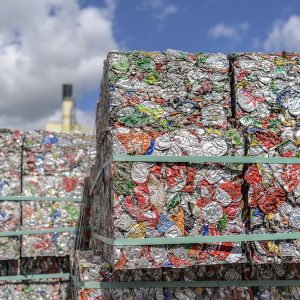
Several long-term drivers continue to support the metal packaging industry. Sustainability is a key factor, with recycling rates exceeding 75% for aluminium and over 80% for steel in major markets. Metal is positioned favourably to plastics, which face economic and regulatory challenges in recycling. The economic value of recycling aluminium is way out in front with over $1.25/kg compared to plastic with zero to $0.9/kg in Europe, and steel with $0.20 – $0.50/ kg has a positive value. Both materials already have full recycling in several countries.
There is also a gradual shift from plastic and glass to metal packaging in selected applications, driven by circular economy objectives and material performance. The total cost of ownership is a holistic measure of cost through the supply chain to end of life, where an example of beverages in Spain on a TCO basis is given, showing beverage cans have the best position.
Challenges and market pressures
Despite strong fundamentals, the industry faces increasing cost pressures. Rising prices for aluminium and steel, combined with geopolitical tensions and energy cost volatility, are expected to impact margins. The current Iran war is most likely a cost impact rather than demand loss, meaning that planned capacity may move back, but will come on stream. The sector has historically demonstrated resilience during periods of economic uncertainty.