
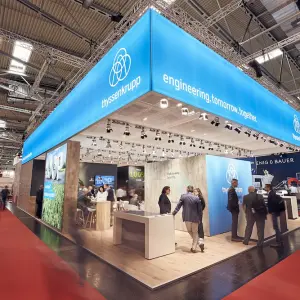
thyssenkrupp supplies bluemint Steel for Pirlo and Henkel cans
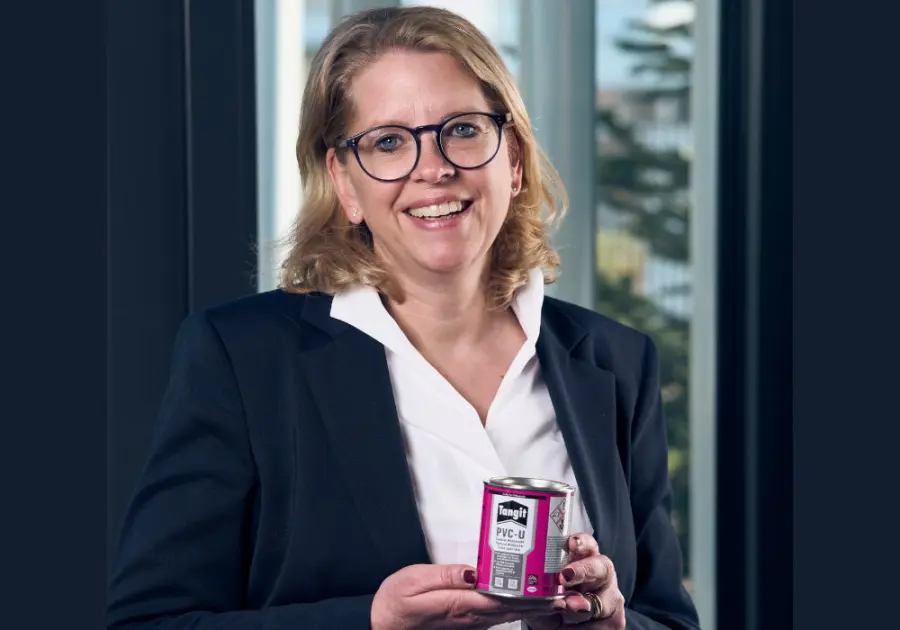
Image: Clarissa Odewald (CEO of thyssenkrupp Rasselstein) with the new tin can made from bluemint Steel
Packaging steel manufacturer, thyssenkrupp Rasselstein, is supporting Henkel in further reducing the carbon footprint of its packaging. For tinplate cans used across various product categories, thyssenkrupp Rasselstein supplies CO₂-reduced bluemint packaging steel. By using this innovative steel, the CO₂ emissions of tinplate packaging can be significantly reduced compared to conventional tinplate.
The sustainable packaging concept is based on the collaboration between Henkel’s Adhesive Technologies business unit, thyssenkrupp Rasselstein as Germany’s only tinplate manufacturer, and the metal packaging manufacturer Pirlo. The CO₂-reduced packaging steels are used in particular for tinplate cans containing adhesives for professional tradespeople and consumers, including products marketed under the Tangit brand.
With bluemint Steel, thyssenkrupp Rasselstein offers a product line in which CO₂ emissions are already significantly reduced during steel production. This is achieved by using specially processed steel scrap in the blast furnace, thereby saving CO₂-intensive raw materials. The specific emissions of bluemint packaging steel are externally verified and certified by DNV.
“With bluemint Steel, we enable our customers to measurably improve the carbon footprint of their packaging – without compromising on quality, safety or processing performance,” said Clarissa Odewald, CEO of thyssenkrupp Rasselstein. “This collaboration demonstrates how ambitious sustainability targets can be jointly achieved along the entire value chain.”
Tinplate packaging is already a sustainable solution today: Steel used in packaging can be recycled repeatedly with virtually no material loss and operates within closed-loop material cycles. In Europe, 82% of tinplate packaging is recycled – more than any other packaging material. In Germany, tinplate achieves a recycling rate of 94.3% in private end consumption – a top figure that clearly underlines the outstanding circularity of packaging steel.
thyssenkrupp Rasselstein is pursuing the goal of becoming climate-neutral by 2045 and is thus making an active contribution to the transformation towards a climate-neutral industry.
