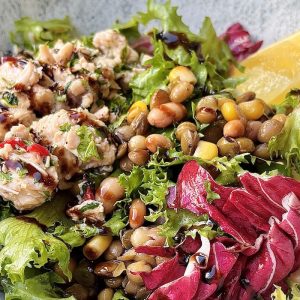
Boosting Portuguese canned food
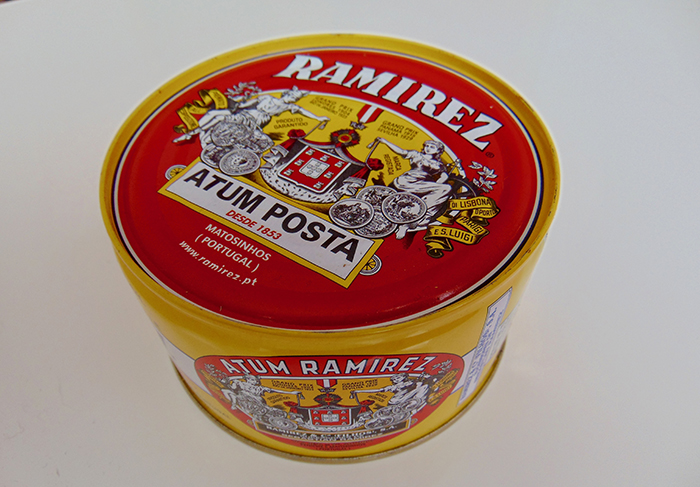
Ramirez’s canned tuna in olive oil
Reporting from Lisbon, Andreia Nogueira explores how tourism and the economic crisis have helped to advance the status of food cans in Portugal
All images courtesy of Andreia Nogueira
The Portuguese canned food sector, internationally known for its canned fish lines, is thriving –thanks to tourism and innovation, despite the many supply chains issues it still faces.
Statistics Portugal (Instituto Nacional de Estatística – INE) data suggests the sector is growing fast, with Portugal having exported €305.3 million’s worth of canned fish products in 2022 (provisional data), 20.3% more than in 2020. In the same period, imports increased 17.5% to €269.6 million.
An example of growth in the sector is the announcement last year that a new €15 million canning factory was being built by canner Conseran – Conservas do Atlântico Norte in the Azores.
Portugal exports 70% of its production of canned fish, mainly to “France, Spain, Italy, the United Kingdom and the US,” said the president of the National Association of Canned Fish Industries (Associação Nacional dos Industriais de Conservas de Peixe – ANICP), José Freitas. Meanwhile, imports come first from Spain, followed by Vietnam, with the most imported fish sold in cans being tuna, most actually canned in Portuguese plants, and some re-exported.
This optimistic outlook follows an unstable situation during the Covid-19 pandemic, Freitas told CanTech International. After an “initial increase in sales” thanks to the lockdowns caused by the Covid-19 pandemic, sales fell afterwards, “despite consumers becoming more aware of canned goods.” The pandemic caused tourism to decline sharply in Portugal, with 73.7% fewer non-resident arrivals in Portugal in 2020 (6.5 million) compared to 2019, according to Statistics Portugal.
Market research has shown how this makes sense as an inflation fighting tool. Lisbon-based market researcher, Marktest Group, has shown 78.2% of households in the Portugal mainland (excluding the Azores and Madeira archipelagos) consumed canned fish or vegetables at home in 2021. Canned food was consumed mainly by the lower income consumers, it added.
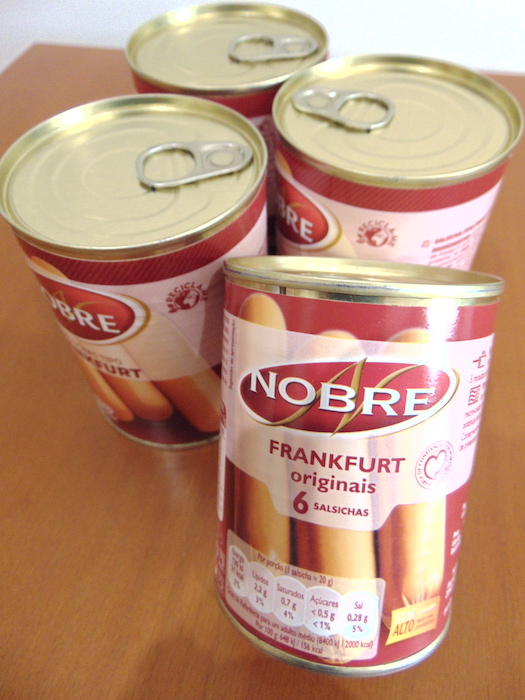
Portuguese company Nobre’s tinned sausages
According to the 2022 statistics, released in May 2023 by the INE, in 2021 there was a decrease of 7.2% in Portuguese production of preparations and canned fish products to 56,189 tonnes compared to 2020, and production of the leading species tuna falling 22.7%, (it accounted for 35.3% of all canned fish products processed in Portugal during 2021). This year-to-year fall was caused by lockdowns, which led to a temporary increase in domestic residential sales of canned goods. Indeed, Portuguese sales of preparations or canned food decreased 12.3% in 2021 to €330.1 million, mainly due to lower sales of canned tuna (-27.9%), said the INE.
The good news is that Portugal remains a major tourism destination, with visitor numbers rebounding to 9.6 million in 2021, according to the INE. Said Freitas: “We can safely say that tourism has more impact on sales than the pandemic. We have different points of sale on tourist routes and in all of them, the demand from international tourists has been growing. We believe that most canned food sold serves as a ‘souvenir,’ which proves that canned food is a reference product for anyone visiting Portugal. Additionally, the cans are very beautiful and easy to carry,” he argued.
Canned food as a tourism sale was featured in the Tourism Leaders Awards, organised by the Portuguese travel industry newspaper, TNews, in March. The Portuguese store, Mundo Fantástico das Conservas Portuguesas (Fantastic World of Portuguese Canned Foods), which sells canned fish in colourful cans, received a best creative brand award.
Moreover, Freitas noticed that “in traditional markets [for Portugal resident consumers and tourists], there [has been] an increase in canned food in the gourmet segment.”
Investors are noticing. In May 2023, European Seafood Investments Portugal, the local subsidiary of Thai seafood company Thai Union, opened a factory store in Peniche. The store “displays the factory’s new brand creation Peniche Can Surf,” a canned selection of tuna salads that reflects Peniche’s “vibrant surfer community and all people supporting a healthy and active lifestyle,” according to the company.
Innovating to boost sales
Freitas said the sector has been “developing health products, namely with low salt and low calories,” mirroring Portuguese consumers’ growing concerns about their health, highlighted by researchers from the University of Lisbon.
ANICP members have also been adding new species of canned fish for sale, bringing the species total to 34, which “combined with different sauces and toppings,” offer around 800 varieties of canned fish products, said Freitas. Some of them are anchovy, cod (which is central to Portuguese traditional food), cockle, cuttlefish, eel, giant squid, octopus, whelk and razor-shell clams, with recipes ranging from tuna salad with black eyed beans to fish in tomato sauce.
ANICP launched a ‘Let’s Conserve What’s Ours’ campaign in 2020, designed to “revive the consumption of canned food and, above all, the quality and diversity of Portuguese canned food,” said Freitas, noting the “high quality fish” found in Portugal.
The industry has also been touting such claims, with Iara Martins, agrifood expert at the governmental Portuguese Agency for Investment and Foreign Trade (Agência para o Investimento e Comércio Externo de Portugal – AICEP) writing in 2020 that Portuguese canned fish was gaining popularity because of its ‘sensitivity’ in production and processing to ensure a quality product, boosting sales.
In December 2022, the Portuguese Parliament even ruled that 15 November would be celebrated as the National Day of Canned Fish.
In the beverage sector, there is growing interest in cans, sparking innovation. General director of the Portuguese Association of Distribution Companies (Associação Portuguesa de Empresas de Distribuição – APED), Gonçalo Lobo Xavier, sees a growing “diversity of options… of canned drinks or ready-to-drink canned drinks in other formats,” including port and tonic or gin and tonic. Xavier states that “this market is growing a lot.” Again, sustainability is part of the strategy, with APED, in the last two years, launching two packaging return pilot projects, one for used cans in exchange for “a two-cent receipt or another type of prize,” and the other covering plastic packaging.
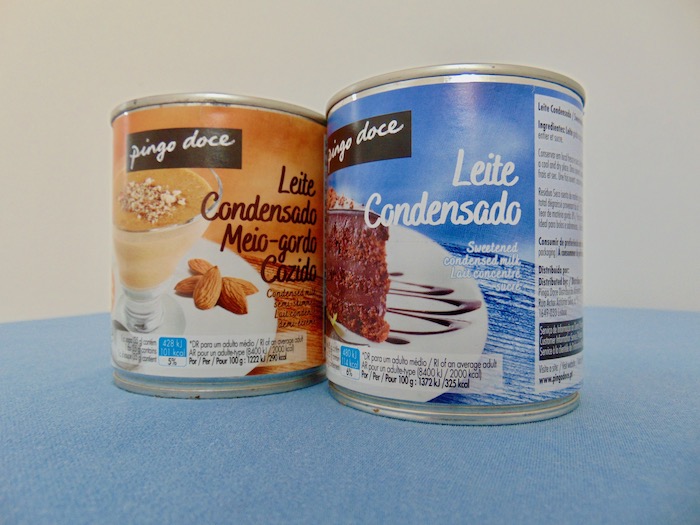
Two cans of condensed milk and sweetened condensed milk, distributed by the Portuguese supermarket chain Pingo Doce
Supply chain issues
According to data provided by London-based market researcher, Euromonitor International, in 2022, 408.2 million units of metal food cans were sold in the Portuguese retail market, down from 2021’s 413.1 million units – while sales of food in metal aerosol cans were stable at 1.1 million units.
“Portuguese cans are made of steel and aluminium, [being] the vast majority from Portuguese and Spanish factories,” said Freitas. He added the pandemic and Russia’s invasion of Ukraine had a “very important impact” on costs, and while the prices of gas and oil “have already returned to prewar values,” the costs of aluminium, steel, fuel, and transportation are “still very high.”
Xavier noted “almost all factors of production had a very large [price] increase even before the war,” which worsened with the conflict, with some of them increasing “20 or 30 per cent.”
He mentioned, for instance, metal sheets (aluminium) and tuna, adding that the lack of supplies led to higher shipping costs.
Manuel Teixeira Marques Ramirez, chairman of Portugal-based canner Ramirez, which has been in operation for 170 years, agrees: Covid-19 and the war “have an impact on almost all production costs, from raw material (fish, aluminium cans, olive oil, oil, etc) to the workforce, including individual protection equipment, energy or machine maintenance.”
Ramirez recalls when the same product/ service had its price increasing “five or six” times, sometimes doubling, on the same day, especially “energy, aluminium and sunflower oil.” Product price rises followed.
Nevertheless, Ramirez told CanTech International, “to lighten the cost structure,” the company sourced “alternative raw materials” or products “from markets less exposed to the consequences of the Russia-Ukraine war.”
Such measures have paid dividends, as Ramirez’ sales volume was €32 million in 2022, of which 55% was exports, with sales up 26% year-on-year compared to 2019.
The government has helped boost canned tuna sales by including it among 46 products exempted from VAT from April to combat inflation. In April, annual food inflation in Portugal was 15.41%, down from 20% in January and February.
Ramirez said that such help should not be restricted to imported fish, arguing that “sardines and mackerel, which are caught on the Portuguese coast,” should have been added too. However, the government has not yet done this.
Another challenge has been theft. Last year, several Portuguese supermarkets put alarms on basic products such as canned tuna due to an increase in food thefts, according to the newspaper, Expresso.
That said, APED’s Xavier claims these precautions were staged only in a limited number of outlets, with such problems largely experienced last September, when food prices started to rise. Xavier believes “things are getting back to normal” now.
The good news is that the increase in canned fish export sales shows that inflation is not dampening European enthusiasm for this product.