Recycling solutions for America’s future
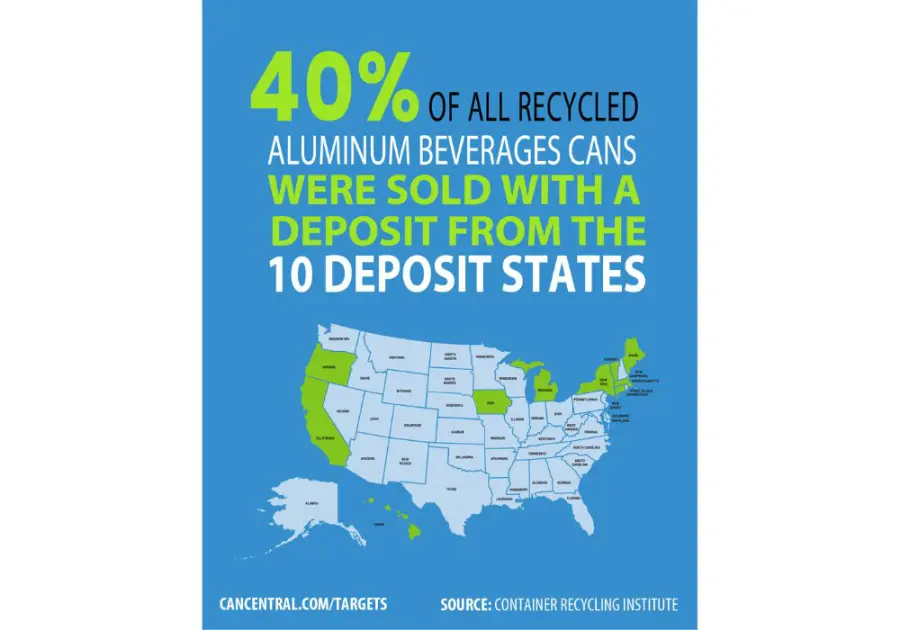
Image: CMI
Can Manufacturers Institute (CMI) is committed to achieving ambitious national recycling rate targets for aluminium beverage cans, starting with a 70 per cent rate by 2030. But if the United States does not rapidly change course soon, they may be nearly impossible to reach.
What is needed are effective policy solutions, the foremost tools being recycled refunds (RR), also known as deposit return systems, and extended producer responsibility (EPR). RR places a refundable deposit on beverage containers to encourage consumers to return empty beverage containers in exchange for a monetary refund, and EPR holds producers (eg, brands) responsible for the management of the entire lifecycle of their products, including recycling. Together, EPR and RR play a collaborative approach to advance a circular economy through a more efficient and sustainable recycling model.
The status quo is simply not enough. According to the Aluminum Association, the US aluminium beverage can recycling rate was around 42 per cent in 2020, 2021, and 2022, and then increased slightly to 43 per cent in 2023.
CMI and the Aluminum Association are advocating for EPR and RR via The Coalition for High Performance Recycling (CHPR), which includes a diverse group of consumer brands, environmental nonprofits, material manufacturers, and packaging suppliers.
While having both EPR and RR is common globally, a state passing an EPR and RR law would be the first to implement both complementary programmes in one law. Ideally, any EPR and RR law would be rooted in a common-sense policy framework:
- Comprehensive implementation: Programmes should be implemented concurrently at the state level.
- Industry responsibility: Programmes should be established and managed by industry, allowing for accountability and flexibility on the design and implementation.
- High performance targets: Programmes should include ambitious but achievable requirements and performance targets that cover the quantity of recovered material.
- Respect for individuals and communities: Programmes should incorporate best practices that promote access and address environmental and health concerns across communities.
- Coordination, convenience and cost efficiency: Programmes should provide diverse redemption and return options, enhancing convenience, cost efficiency and effectiveness without raising taxes.
In 2026, CHPR is working primarily in states that are currently exploring EPR for packaging legislation. But there are also other coalition-led efforts, including many recycling and industry based groups advocating on federal legislation that would increase funding and access for recycling in America. Here is a current look at the states in play this year:
STATE LEGISLATION
Rhode Island
Overview: Rhode Island legislation would create a statewide EPR programme for packaging and paper products and an RR system for beverage containers. This combined approach shifts the costs and responsibilities of waste management from taxpayers to the companies that produce these materials. If passed, Rhode Island would become the first state to pass legislation with this combined EPR and RR approach.
Why it matters: Can makers benefit from this combined approach, as metal can recycling rates increase for consumer package goods consumed at home and on-the-go. More residents will have access to at-home recycling collection, and the deposit incentive encourages them to hold onto beverage containers consumed away from home, leading them to recycle their cans and get their refund.
2026 policy perspective: The legislation is unlikely to pass this year, due to an ongoing implementation assessment conducted by the Department of Environmental Management. However, the assessment is an important first step that will look at how an EPR and RR programme would be established in the state.
Findings from the assessment will inform lawmakers as they consider the legislation next year. CMI will be testifying at hearings in support and will be presenting at a conference of local elected officials at their annual meeting on the cost savings these programmes will bring to cities and towns.
Washington
Overview: Washington state legislation would require beverage brands to form a producer responsibility organisation to fund and implement a ten-cent refund value redemption programme for beverage containers.
Why it matters: New RR programmes are key policies to help the aluminium beverage can industry reach its recycling rate goals. In lieu of a national programme, improving programmes in the existing ten states and adding state programmes are necessary.
2026 policy perspective: The bills were introduced last year but did not advance as lawmakers were focused on an EPR for paper and packaging bill. That legislation became law. This year, environmental groups, beverage container manufacturers, and Washington’s wine industry are aligned and focused on creating a RR programme in the state. Supporters are optimistic that this will be the year, but there are concerns from some lawmakers about increased consumer costs and the convenience of redemption in rural parts of the state.
Other key states to watch: Like Washington, Maryland passed EPR for packaging last session, so the beverage container manufacturing sector is working to pass an RR programme. Meanwhile, New York’s RR programme dates to 1983 and needs updating, including raising the refund from five to ten ents and adding more beverage categories. EPR is being considered as well, with competing bills introduced: one supported by anti-plastic advocates and another by the business community.
FEDERAL LEGISLATION
Strategies to Eliminate Waste and Accelerate Recycling Development (Steward) Act
Overview: This federal legislation would establish a US Environmental Protection Agency (EPA) grant programme to expand recycling access in underserved communities – areas with no material recovery facility (MRF) within 75 miles – by authorising strategic infrastructure investments and public-private partnerships. The Steward Act will also modernise recycling and composting data collection. If passed, this legislation would establish standardised metrics for the EPA to track current system performance used to assess and improve waste management systems nationwide.
Why it matters: Expanding collection systems and access to recycling infrastructure will boost metal can collections. More cans captured at every step of the recycling process means more feedstock stability for can-sheet and steel recycling supply chains. Additionally, better, and more accurate national data will demonstrate and strengthen the case for metal cans’ recyclability. Updated recycling data will also help CMI guide and educate lawmakers as we continue to our advocacy efforts to protect, strengthen and grow the metal can industry.
2026 policy perspective: This bill was introduced in the 119th Congress by Shelley Moore Capito (R-WV), senator Sheldon Whitehouse (D-RI), and senator John Boozman (R-AR) and was one of the first bills considered by the Senate Committee on Environment and Public Works. The Steward Act passed unanimously out of the Senate in November of 2025 and has been referred to the House of Representatives for consideration.
This is now the third consecutive Congress in which the Steward Act has been introduced, and of the current slate of pending recycling legislation, has the best chance of passage. CMI is strongly supportive of the Steward Act. The legislation aligns with CMI’s commitment to expanding recycling access and infrastructure in a way that benefits high-performing recyclable products like metal cans.
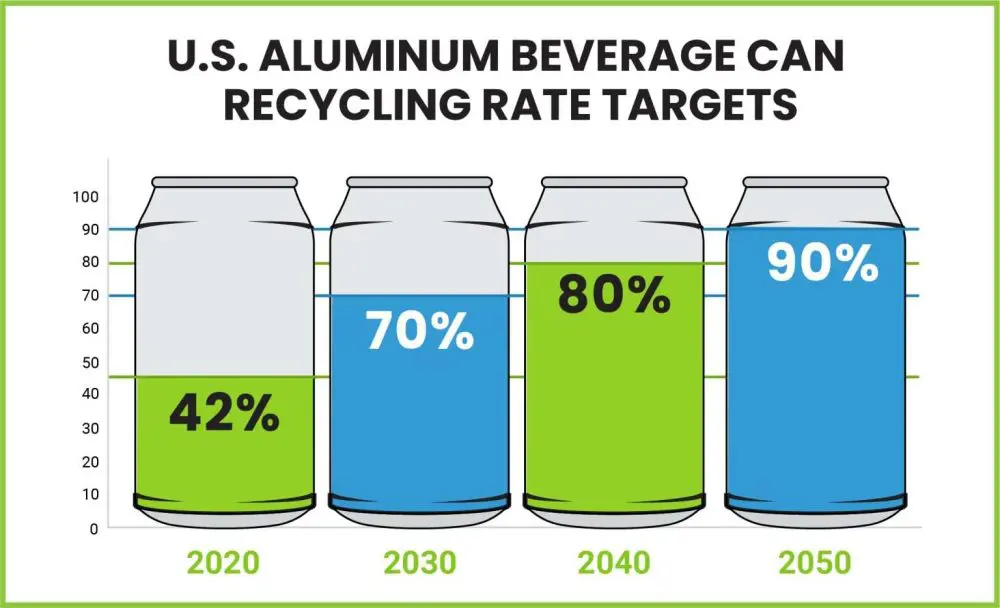
Image: CMI
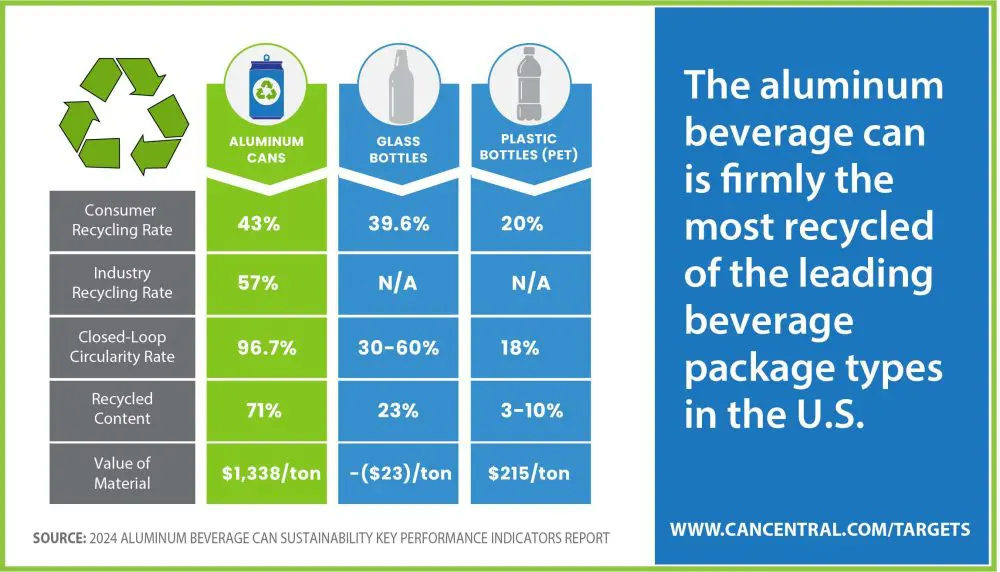
Image: CMI
Cultivating Investment in Recycling and Circular Local Economies (Circle) Act
Overview: The Circle Act was introduced by Representative Brian Fitzpatrick (R-PA) and Representative Tom Suozzi (D-NY) in July 2025. This legislation creates a 30 per cent tax credit for qualified recycling infrastructure investments over the next ten years. The legislation also provides a direct rebate of the same amount to local governments and municipalities for investments in recycling technologies and waste reduction programmes. This legislation is designed to incentivise public and private sector investments in recycling infrastructure and technology.
Why it matters: The Circle Act helps strengthen the domestic supply of metal feedstock that supports aluminium and steel can recycling and end markets. Investments to expand and update current recycling operations, as well as to build new facilities, will boost current capacity, reducing reliance on virgin material inputs.
The Circle Act will also create new American manufacturing jobs. Across materials, a fully developed residential recycling system could return more than $11 billion in new wages and create over 200,000 jobs across the country, from haulers and truck drivers to machine operators, engineers and technicians.
2026 policy perspective: The Circle Act is the first of its kind bipartisan legislation, providing tax incentives for recycling infrastructure investments. CMI continues to work with Congressional and industry partners to advocate on behalf of The Circle Act. The bill continues to gain momentum in the House and is on track for introduction this year in the Senate.
Aluminium beverage can manufacturers and their suppliers are committed to reaching new heights in the US aluminium beverage can recycling rate. Reaching our recycling rate targets would have significant environmental and economic impacts.
Consider that in 2023, if the recycling rate had been 70 per cent instead of 43 per cent, there would have been around 28.9 billion more cans recycled. The recycling of additional cans would have generated more than $450 million in revenue for the US recycling system and resulted in energy savings that could power more than 1.3 million homes for an entire year.
To get there, it will take many advocates working together to achieve recycling solutions. If you would like to join our efforts by supporting the CHPR coalition, or becoming a CMI member, please reach out to us, so we can further expand our influence this year and beyond.
Pearce Crosland is senior director of federal government relations and regulatory affairs at Can Manufacturers Institute. Email: [email protected]
Mike Smaha is vice president of state government relations and regulatory affairs at Can Manufacturers Institute. Email: [email protected]
Topics
Aluminium recycling Industrial strategy and policy legislation recycling
PeopleOrganisationsAluminum Association Can Manufacturers Institute (CMI)
Regions