Drivers & influencers
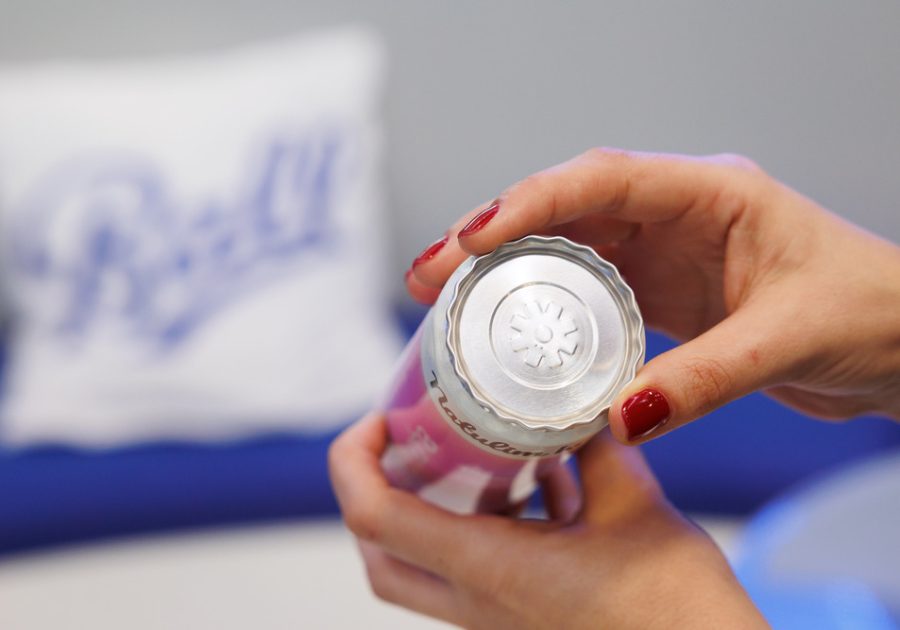
Image: Ball Corporation
1. What are going to be the key drivers around sustainable products this year?
The drive towards sustainability is accelerating, propelled by three factors: stringent regulations, a fundamental shift in brand values and increasingly sophisticated consumer demand, a trio that are all interrelated. Demand is shifting toward packing formats that are designed for circularity, including higher recycled content and compatibility with existing recycling systems.
For example, governments are moving from voluntary guidelines to mandatory disclosure and due diligence. Regulations such as the EU’s Corporate Sustainability Reporting Directive (CSRD) and the upcoming UK Sustainability Reporting Standards (UK-SRS) are compelling large companies to provide detailed, audited data on their environmental and social impacts. These  requirements are pushing companies to scrutinise Scope 3 emissions, making packaging a priority focus area for decarbonisation efforts.
In response to this, leading brands are embedding sustainability within their core strategy, viewing it not as a cost but as a crucial driver of long-term value and competitive advantage. Many brands now see packaging sustainability as a route to cost resilience, through lightweighting, material efficiency and reduced energy intensity. A commitment to environmental and social responsibility is now integral to building brand reputation and fostering consumer trust.
Consumers are not only willing to pay a premium for sustainable goods but are also demanding greater transparency and holding brands accountable for their claims, showing a growing intolerance for greenwashing. Shoppers increasingly favour packaging with visible, verifiable sustainability credentials and clear labelling they can trust.
2. How does Ball balance design complexities while still ensuring its products remain infinitely recyclable?
The recyclability of our products is inherent. Unlike many other materials, aluminium can be recycled again and again without any loss of quality. This means that an aluminium can, for example, can be melted down and reformed into a new can, retaining all of its original strength and properties. To maintain this circularity even as designs evolve, we apply strict design-for-recycling principles, ensuring formats, coatings and finishes remain fully compatible with existing recycling systems.
This process is very efficient, saving approximately 95% of the energy required to produce primary aluminium from its raw material, bauxite ore. This energy reduction directly translates to a significantly smaller carbon footprint, making recycled aluminium a key tool in the effort to decarbonise packaging. In this way, innovation and design differentiation are developed within clear recyclability parameters rather than being treated as trade-offs.
Furthermore, its high recycling rate and material value help divert a substantial amount of waste from landfills. Its intrinsic economic value creates a strong financial incentive to collect and reprocess aluminium, which helps fund and sustain recycling programmes, ensuring the circular system remains both environmentally beneficial and commercially viable. We also work closely with customers during product development to align design ambitions with circularity goals from the outset.
3. How do contemporary sustainability claims (for example “100% recyclable aluminium”) truly resonate with end consumers versus industry stakeholders?
A sustainability claim like “100% recyclable aluminium” resonates very differently with end consumers and industry stakeholders because each group evaluates it based on distinct motivations and knowledge levels. For the end consumer, the claim’s power lies in its simplicity. It functions as a clear signal of a brand’s good intentions, building trust and providing a simple, positive feeling at the point of purchase. In a crowded retail environment, that clarity can be a decisive factor in brand choice.
In contrast, for an industry stakeholder – such as an investor, regulator, or B2B customer – the “100% recyclable” claim is a baseline expectation. They demand verifiable data on actual recycling rates, the percentage of recycled content used in the new product, and the complete lifecycle analysis (LCA) of the material. They are also assessing whether claims align with emerging disclosure standards and whether they translate into measurable emissions reductions. Their evaluation is driven by the need to ensure regulatory compliance, mitigate supply chain risks, and assess the long-term economic value of using the material.
Ultimately, the claim serves two different functions: for the consumer, it’s the story, while for the industry stakeholder, it’s part of a much larger data set. While consumers are becoming more sophisticated and starting to question the gap between “recyclable” and “recycled,” industry professionals already operate with this level of scrutiny. This growing consumer awareness is gradually narrowing that gap. Therefore, successful sustainability communication requires brands to tell a simple, resonant story to the public while simultaneously having the robust, transparent data ready to withstand professional analysis and prove a genuine commitment to circularity. The most credible claims are those where both audiences ultimately arrive at the same conclusion: that the sustainability promise is real, actionable, measurable and, most importantly, simple.
4. What are the most misunderstood facts about aluminium recycling that impact consumer behaviour and brand messaging?
The reality is that recycling aluminium is incredibly impactful. It saves up to 95% of the energy required to produce new aluminium; the energy saved from a single aluminium can is enough to power a TV for three hours. Yet this scale of impact can be underestimated by consumers which can reduce the perceived importance of everyday recycling actions.
However, there are misconceptions about what and how to recycle. For example, many consumers believe small or crumpled pieces of foil aren’t significant. That’s simply not true. In reality, even small volumes matter because aluminium retains its value and recyclability regardless of size or shape. There’s also a lingering perception that recycled materials are inferior to new ones. For aluminium, this is categorically false. Not only that, the aluminium in a can you recycle today can be back on the shelf as a new can in as little as 60 days. This speed of material recovery is rarely understood, yet it is central to aluminium’s sustainability advantage. This makes it a perfect example of a circular material.
Brands using recycled aluminium can and should shout about it as this can emphasise the quality and circularity of the material. Clear, factual messaging can help close knowledge gaps and directly influence recycling behaviour, such as highlighting that 75% of all aluminium ever produced is still in use today. That talks about not only the qualities of the material, but the infrastructure around it that makes it perfect to be in the market and to offer a fully circular solution for our packaging needs.
5. How would you say commercial branding of aerosol products has changed over the past decade?
The branding of aerosol products has moved from functional messaging to a focus on sustainability, premiumisation and personalisation. The can is now a primary canvas for differentiation, using unique shapes, textures and high-definition graphics to create a premium feel that competing packaging formats cannot replicate. This shift reflects brands treating packaging not just as a container, but as a core brand asset. The aerosol’s hermetic seal, which preserves product purity, further enhances this premium positioning when combined with sophisticated external designs.
Ball Corporation is at the forefront of this shift, pioneering innovations that enable brands to stand out. In sustainability, Ball’s ReAl alloy produces cans that are up to 30% lighter, and they offer packaging with up to 50% recycled content, enabling brands to build environmental messaging. This allows sustainability to become a visible point of differentiation rather than a hidden attribute. Simultaneously, Ball has revolutionised on-shelf appeal with its 360° shaping technology for unique silhouettes and Eyeris HD printing for photorealistic graphics. These tools empower brands to create a compelling physical presence, capture consumer attention and communicate quality through innovative design. In a competitive retail landscape, that physical impact is often the decisive moment in purchase choice.
6. How have consumer expectations around personalisation impacted your metal packaging design choices? Is personalisation a niche category would you say, or growing in popularity?
Historically, the industrial scale of can manufacturing made customisation difficult, but this has been overcome by advanced printing. The key enabler is variable printing technology, such as Ball’s Dynamark, which enables brands to print up to six unique designs within a single production run for personal and home care aerosols. This innovation makes mass-customisation campaigns, limited edition collectibles and interactive QR-code promotions feasible and cost-effective. It allows brands to respond faster to trends, collaborations and seasonal moments.
Far from being a niche category, personalisation is a rapidly growing mainstream trend. Its popularity is fuelled by the connection it creates, making a mass-produced item feel special. This uniqueness is driving significant social media engagement and authentic user-generated marketing. Brands also find that personalised products can command a premium price and are well-suited for the growing direct-to-consumer (DTC) market. It has become a crucial strategy for building brand loyalty and achieving standout visibility on the shelf. What was once a novelty feature is now becoming a strategic marketing tool.
7. In terms of metal packaging in general as a luxury item, is the look of the package more concerned with simplicity now?
The look of luxury metal packaging is increasingly concerned with a sophisticated and deliberate simplicity, often aligned with the “quiet luxury” trend. This move toward minimalism is a conscious reaction against loud, cluttered branding. It signals confidence in both the product and the material itself.
When busy graphics are removed, the focus shifts to the inherent quality of the package itself: its shape, the natural beauty of the metal and its satisfying weight. The tactile experience becomes paramount, with matte or soft touch finishes and subtle embossing replacing printed ink to convey craftsmanship. The simplicity feels curated and intentional. In this context, restraint becomes a design statement.
However, ornate design is not obsolete. It remains highly effective for more targeted applications, such as vibrant limited editions or for heritage brands known for their opulent aesthetic. In general, however, while ornate designs have their place, the dominant trend is a confident minimalism that lets the quality of the metal itself communicate the brand’s premium status. Brands are increasingly choosing design language that reflects their positioning rather than following a single design aesthetic trend.
8. How crucial is collaboration becoming to your business, and are there any upcoming projects you could let us know about?
Collaboration is fundamental to Ball’s business strategy, driving innovation, sustainability and growth by sitting at the heart of our operations. Most of the significant advances in packaging today are simply not achievable in isolation.
This approach is visible in three key areas. Firstly, we advance sustainability through pioneering ventures like our Elysis partnership to create carbon-free aluminium, a goal achievable only through shared efforts. Secondly, we co-create market-defining products, such as the Meadow Kapsul, by translating a brand’s vision into an iconic package through creative partnerships. Our role for this project was to provide our existing infrastructure and global network to make sure that it could be fully scalable.
Finally, we are building a truly circular economy by working with waste management and municipal partners to improve recycling infrastructure. Each of these partnerships strengthens the value chain rather than a single touchpoint.
While future projects remain confidential, our strategic direction is clear. We will continue to focus on high-recycled content and push the boundaries of our shaping and printing technologies. Collaboration will remain the mechanism through which those ambitions are accelerated. The next wave of growth will come from formats that link user behaviour, sustainability and premium design in one system.
9. Finally, where does Ball see the biggest growth opportunities for metal packaging within the beauty and cosmetics segment?
The biggest growth opportunities for metal packaging are where its unique properties – protection, premium feel and sustainability – can be most effectively leveraged. In categories where formulation performance and brand perception are critical, packaging plays an outsized role.
Advanced skincare is a primary growth area. Educated consumers understand that aluminium’s opaque, airtight nature offers superior protection for sensitive active ingredients like Vitamin C and retinol. In haircare, metal is essential for the aerosol delivery of high-performance dry shampoos and styling foams. Furthermore, the wellness and body care category is expanding, where beautifully designed aluminium packaging has significant shelf appeal, transforming everyday items, such as deodorants and lotions, into lifestyle designs. Here, packaging becomes part of the product experience itself. In personal and home care, packaging is no longer a passive container – it’s an active part of the product experience.
Demographically, this growth is powered by Millennials and Gen Z. Their purchasing decisions are heavily influenced by a demand for sustainability, a story perfectly told by aluminium. For these consumers, packaging credibility directly affects brand credibility.
Geographically, Europe is important due to strong regulations like the EU Green Deal, which is pushing brands away from single-use plastics, making aluminium a strategic necessity. North America is a fast-follower, where innovation is spurred by retailer standards and a thriving category of sustainable indie brands. Of course, there are similar long-term opportunities across Asia-Pacific, too. Taken together, these markets represent both immediate momentum and long-term structural growth.